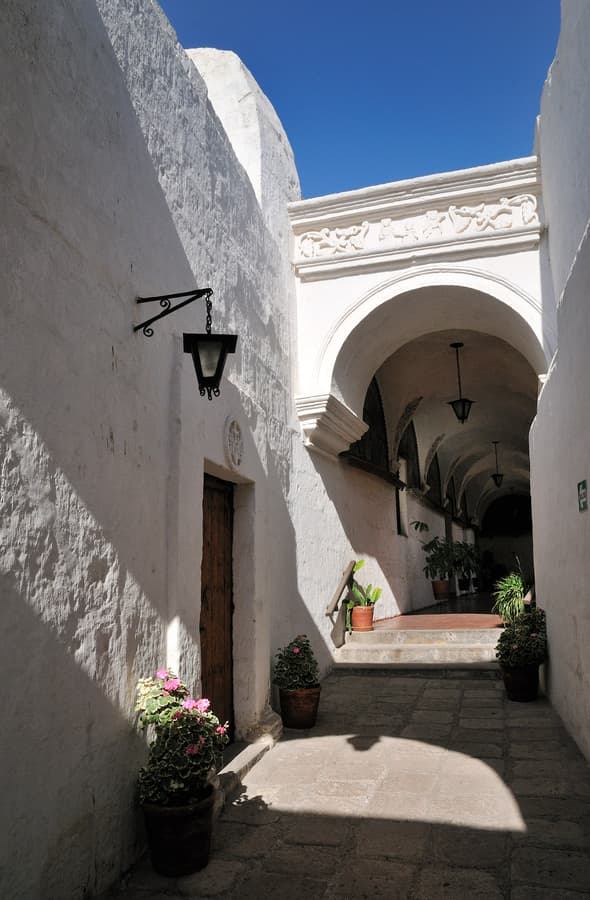
Arequipa has a linguistic advantage that few South American cities can match: a clear, articulate accent without the regional shortcuts that make learning Spanish difficult in other cities. Combined with a low cost of living, a productive climate, and none of the distractions of beach tourist destinations, Arequipa is the best place in Peru to learn Spanish — and possibly the entire continent.
Why Arequipa Is a Great City to Learn Spanish
The case for Arequipa as a language learning city rests on four pillars. First, the accent: linguists consistently cite Arequipeño Spanish as one of the clearest and most articulate in the continent. Lima's coastal Spanish drops final consonants and merges syllables; Cusco's Spanish has heavy Quechua influence in rhythm and vocabulary. Arequipeño is measured, articulate, and uses standard Castilian grammar without the regional shortcuts that make other dialects hard for learners.
Second, cost. Arequipa is significantly cheaper than Lima for living through months of intensive study. Rent, food, and classes — all more accessible.
Third, the absence of beach distractions. Coastal cities like Máncora or Huanchaco pull attention toward surfing and social life. Arequipa does not have that problem. It is a working, intellectual city with a strong university culture (UNSA has over 40,000 students).
Fourth, forced immersion. Unlike tourist-heavy Cusco where English is everywhere, Arequipa requires Spanish for daily life. Local restaurants, the market, transport — everything operates in Spanish. This pressure is the best teacher.
Types of Instruction Available
Group classes: Typical class size 3–8 students, 2–4 hours/day, S/.20–30/hr. Best for social learning and structured progression. Small groups in Arequipa allow more interaction with the teacher than in large-capital language academies.
Intensive programs: 4 hours of instruction per day plus afternoon activities (cooking class, city tours, cultural visits). Usually offered by language schools in weekly packages ($150–250/week all-in). The most complete option for rapid progress.
Private one-on-one: Most flexible and fastest progression. S/.40–60/hr with a qualified teacher. Find via Facebook groups, language schools, or word of mouth.
Conversation partners: Free — native speakers wanting to practice English, you practice Spanish. Find via university bulletin boards and Facebook. Valuable complement to formal instruction.
Finding Language Schools
Arequipa has several established Spanish schools in the Centro Histórico and Yanahuara. Most offer: initial placement test, curriculum from A1 to C1, cultural activities, and accommodation options (homestay or help finding an apartment). Prices have become more competitive.
Since schools open and close with some frequency, ask for current recommendations in the "Expats in Arequipa" Facebook group — expat reviews are more reliable than Google for this kind of information. Word-of-mouth from other students who just finished a program is especially valuable.
Private Tutors — Finding the Right One
If you prefer individual instruction, private tutors in Arequipa are easy to find:
- Facebook groups: Post "Looking for Spanish tutor, Arequipa, 1hr/day" and you'll have 5+ responses within hours.
- Italki.com: Verified Arequipa-based tutors at $5–15/hr, online or in person. You can read reviews from other students.
- University students: UNSA (Universidad Nacional de San Agustín) students seeking language exchange partners or paid tutoring. Quality varies; interview before committing.
The best tutors fill up fast. If you find one who works for you, keep them.
The Language Immersion Approach
Full immersion means a Spanish-only environment outside class time. Strategies that work: no English TV or podcasts during the study period; tell your Yanahuara café barista you're practicing Spanish and want them to correct you; find a tandem partner (1 hour English, 1 hour Spanish).
Homestays with non-English-speaking families are the most effective immersion, though less comfortable than your own apartment. Worth it for the first month if maximum progress is the goal.
Realistic Timeline
Expectations matter. These are realistic timelines based on learner experience in Arequipa:
- Starting from zero: 3 months of intensive (4 hrs/day + immersion) → conversational A2/B1
- Starting from A2: 2–3 months intensive → functional B2
- Survival Spanish to handle daily Arequipa life: 3 weeks of 2 hrs/day
- Fluency (C1): 12–18 months of intensive, consistent immersion
Arequipeño Quirks
Knowing the local peculiarities accelerates comprehension and integration:
- "Pe" — sentence filler (like "you know" in English)
- "Causa" — buddy, friend
- "Misio" — broke, no money
- "Ahorita" — means anywhere from "right now" to "sometime today." Do not plan around it.
- Formal "usted": Used more commonly in Arequipa than in Lima — the regional culture is more traditional. Don't be surprised if people address you formally in contexts where you'd expect casual speech.
Pre-Arrival Preparation
Don't arrive as a complete beginner. Use Duolingo or Pimsleur Spanish for 4–6 weeks before arrival to learn basic vocabulary and pronunciation. Even 100 common words makes the first week dramatically less stressful and helps tutors start at a more productive level.
The goal of pre-arrival preparation is not to arrive speaking Spanish — it is to arrive with enough foundation for the immersion environment to work from day one. Without that minimum base, the first days are exhausting and demoralizing.
Group class
S/.20–30/hr (~$5–8)
Private class
S/.40–60/hr (~$11–16)
Intensive program (4hrs/day)
$150–250/week
Online tutors (Italki)
$5–15/hr
Best for
A2–B2 level students
Arequipeño accent
Clear, articulate, standard
Arequipeño Spanish is the best accent to learn in Peru