The Monastery of La Recoleta: Arequipa's Forgotten Library
Across the Grau bridge, hidden in the Selva Alegre neighborhood, there is a Franciscan monastery with 20,000 antique books, a colonial art collection, and pre-Columbian mummies that few Arequipeños know about. It is one of the most extraordinary museums in Peru.
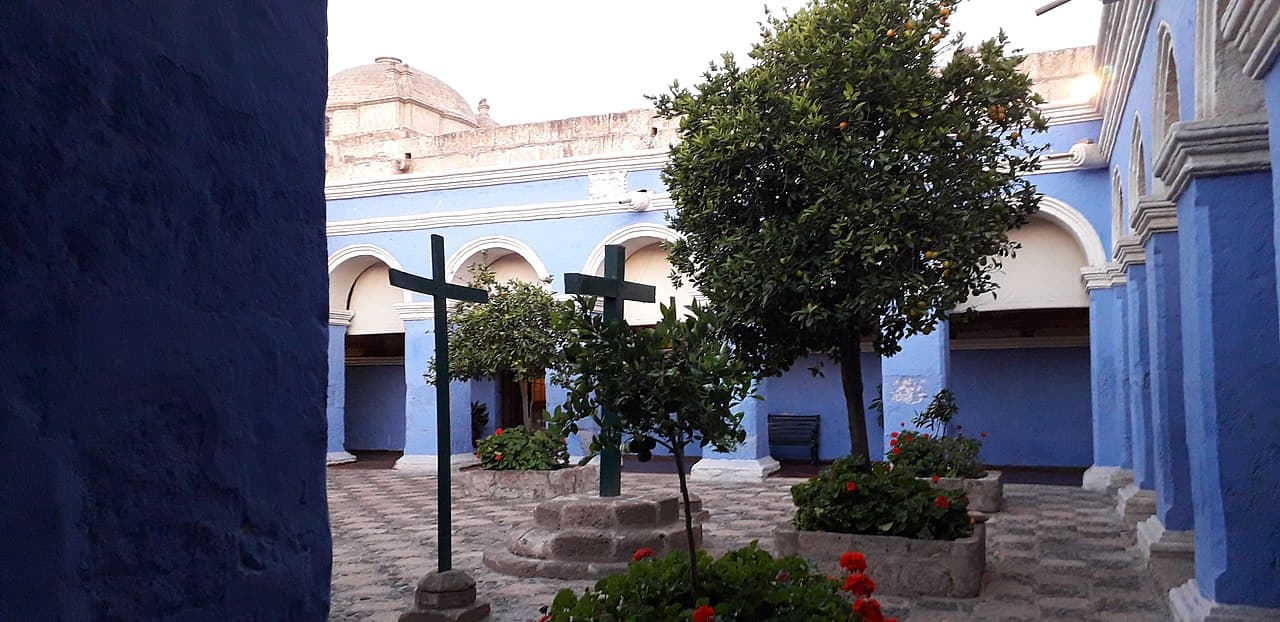
Most visitors to Arequipa cross the Grau bridge to reach the San Lázaro neighborhood and walk through it as a pleasant detour on their way back to the center. Few know that two blocks from that bridge, hidden behind a sillar wall with no visible tourist signage, exists one of the richest cultural repositories in all of Peru.
The Monastery of La Recoleta was founded in 1648 by the Discalced Franciscans. For three centuries it accumulated books, art, documents, and artifacts with the meticulousness of an institution that did not expect anyone to come and see its collection. That isolation was its protection.
The library: 20,000 books and counting
La Recoleta's library is the primary reason to come. It holds approximately 20,000 volumes, several thousand of which are incunabula and books from the 16th and 17th centuries — some unique in South America. The cedar shelves holding them are the same ones from three hundred years ago. The smell of the room is that of undigitized history.
The most famous is the so-called "Book of the Million" — a 16th-century edition of Marco Polo's travels with handwritten margin annotations whose authorship has not been conclusively determined. Book history specialists make pilgrimages from Europe to see it.
In this library there are books that know things no database has yet preserved. To enter is to peer into the memory of a continent.
The pre-Columbian mummies
In the ethnology room — and this is where La Recoleta surprises those who thought it was just a colonial museum — there is a collection of mummies and pre-Columbian artifacts that the Franciscan friars accumulated during their missions in the Amazon and the Andes between the 17th and 19th centuries. It is a collection of ethnic and geographical diversity that has no equivalent in any public museum in Arequipa.
How to visit
The monastery is on Calle La Recoleta, crossing the Grau Bridge from the historic center (10 minutes on foot from the Plaza de Armas). Open Monday to Saturday 9am–12pm and 3pm–5pm. Entrance costs S/ 15. The monastery guides are friars or laypeople who have devoted years to knowing the collection — do not skip them. A visit without a guide loses 70% of its meaning.
Did you enjoy this story?
Share it with someone who loves Arequipa.
Have your own Arequipa story?
Submit an article →