Sumbay Cave Paintings: Thousands of Years of Rock Art in Arequipa's High Puna
About two and a half hours from the city, at nearly 4,000 meters, a rock shelter holds hunting scenes painted by people who lived here long before the Incas. How to get there, what you will see, and why the trip is worth it.
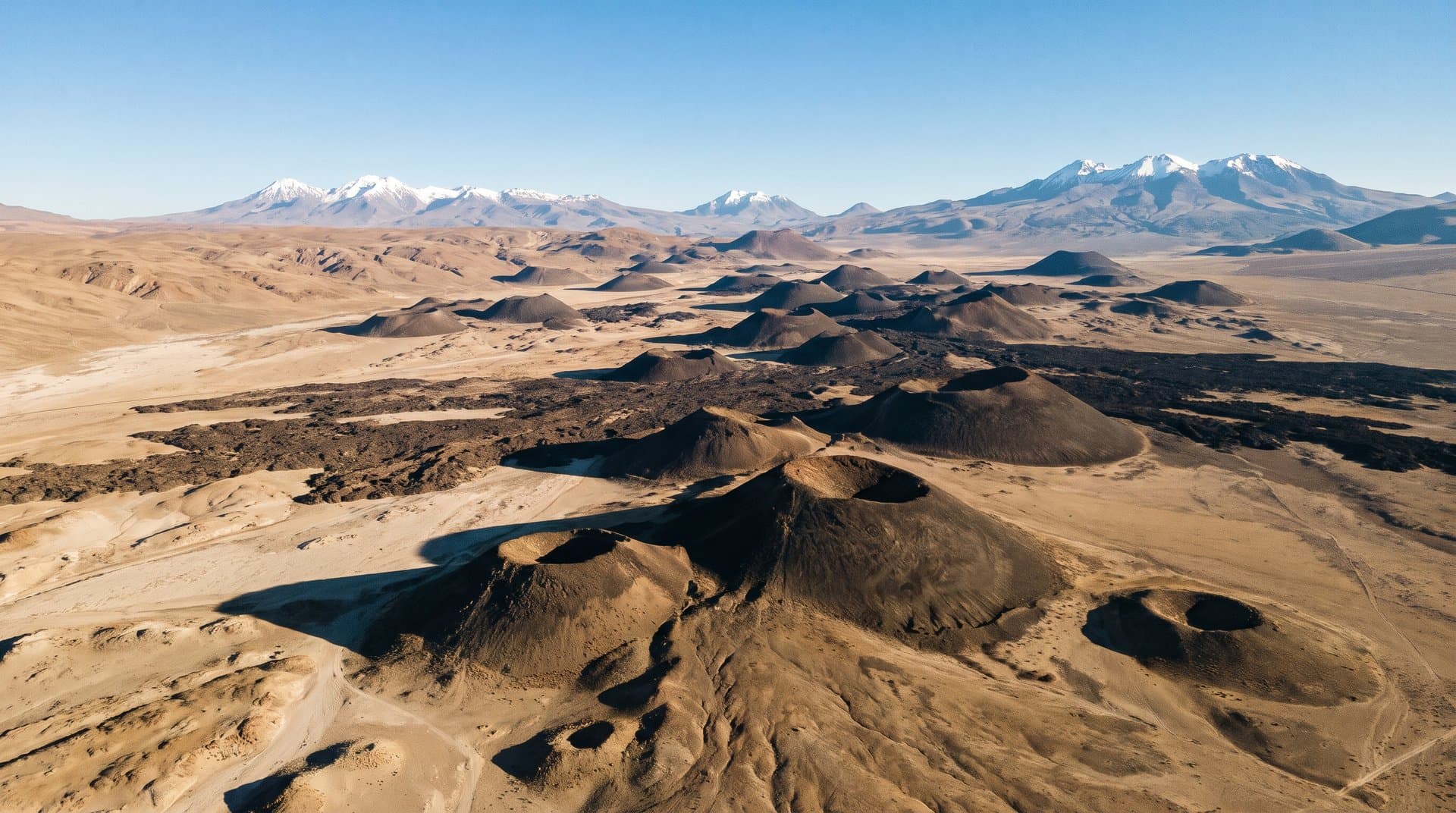
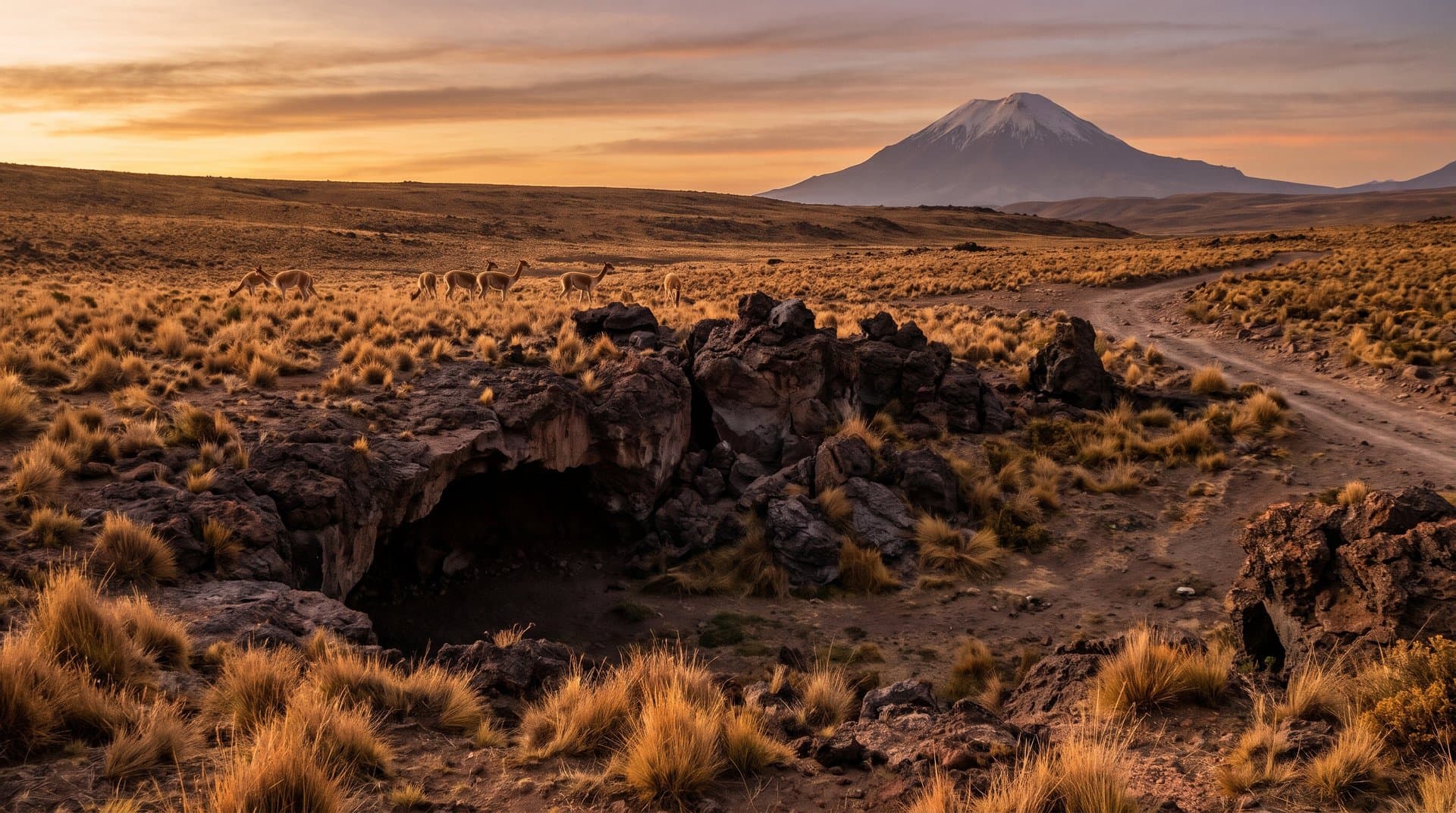
Sumbay sits in the San Juan de Tarucani district, in the Arequipa highlands, on the way toward Caylloma. You reach it via the road that climbs from Yura into the Salinas and Aguada Blanca National Reserve, the same stretch where herds of wild vicunas graze right next to the pavement. The trip from the city takes roughly two and a half to three hours, and the site sits at almost 4,000 meters above sea level, considerably higher than Arequipa city itself.
Who painted these walls
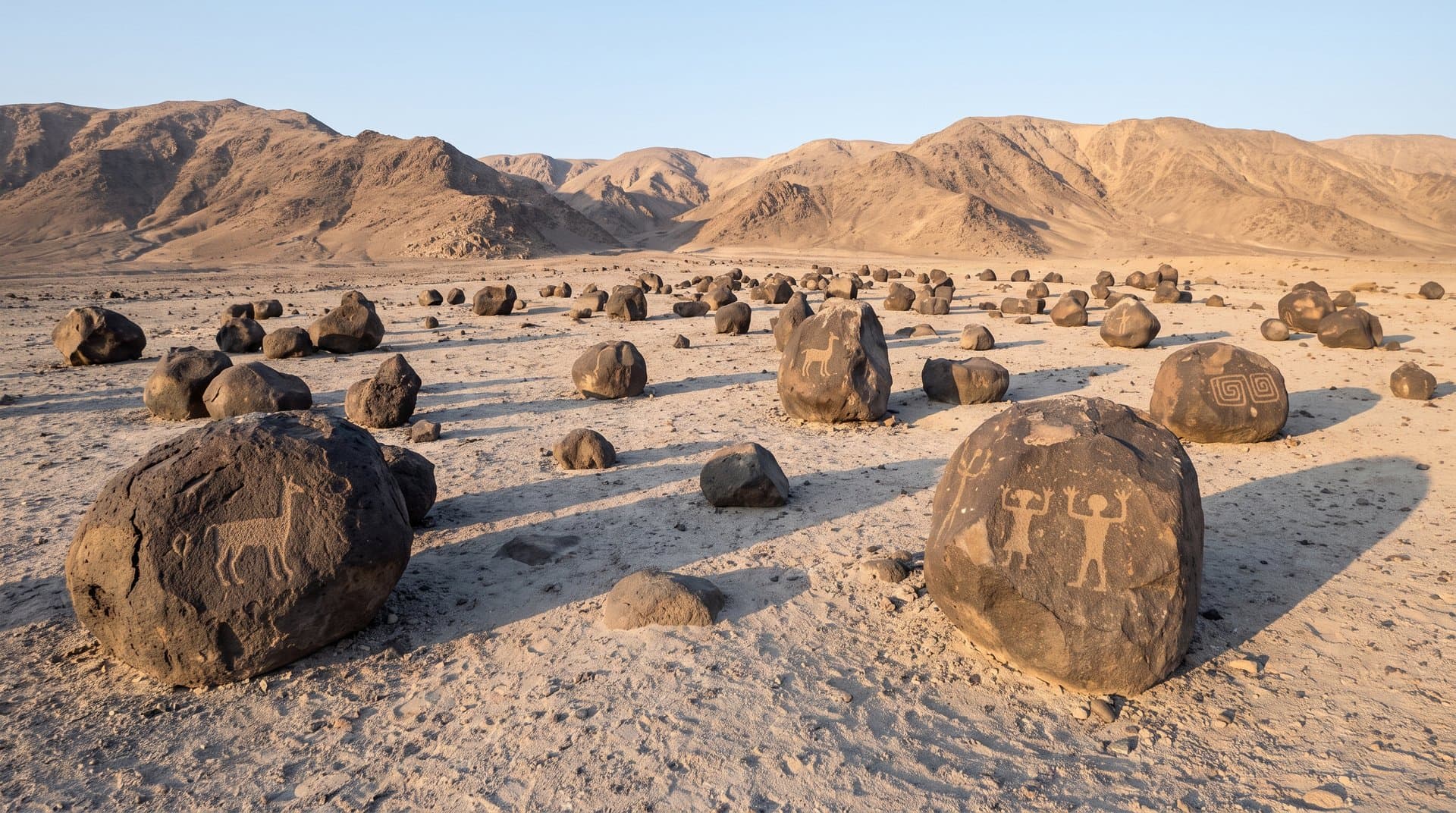
The paintings are made with red ochre pigment on a rock shelter, a stone wall protected by a natural overhang that has served as a roof for thousands of years. Archaeologists who have studied the site since the mid-20th century attribute the paintings to hunter gatherers who lived off wild camelids long before the Inca Empire existed; some estimates place them several millennia old, among the oldest documented rock art in southern Peru.
The scenes repeat a single theme: groups of camelids, likely vicunas or guanacos, alongside human figures in hunting poses, holding what appear to be bolas or spears. There is no single dramatic image like at other rock art sites; instead it is a layered set of marks added over generations, suggesting the shelter was used again and again rather than just passed through.
This is not a museum behind glass. It is a rock wall out in the open, exactly where it was left. That is what makes it valuable, and also what makes it fragile.
Getting there and what to bring
There is no direct public transport to the rock shelter. The practical way in is a tour booked from Arequipa (several agencies run it as a half day trip or combine it with the Salinas and Aguada Blanca Reserve) or a private vehicle with someone who knows the last unmarked stretch. The road crosses open pampa where vicunas are common, and in the colder months nighttime frost can leave the road icy by sunrise.
At almost 4,000 meters, altitude sickness is real even for travelers already adjusted to Arequipa city, which sits at 2,335 meters. Bring water, coca leaves or anise tea for your stomach, and layered warm clothing: the puna sun burns hard by day and the temperature drops fast the moment it sets. There are no services on site, so carry whatever you will need.
Access is free and there is no fixed guard schedule, which also means the site's upkeep depends on whoever shows up. Do not touch the paintings, do not camp against the rock, and pack out your trash. It is protected cultural heritage on paper, but in practice its survival depends on the handful of visitors who make it this far treating it that way.
Vous avez aimé cette histoire ?
Partagez-la avec quelqu'un qui aime Arequipa.
Vous avez votre propre histoire sur Arequipa ?
Soumettre un article →