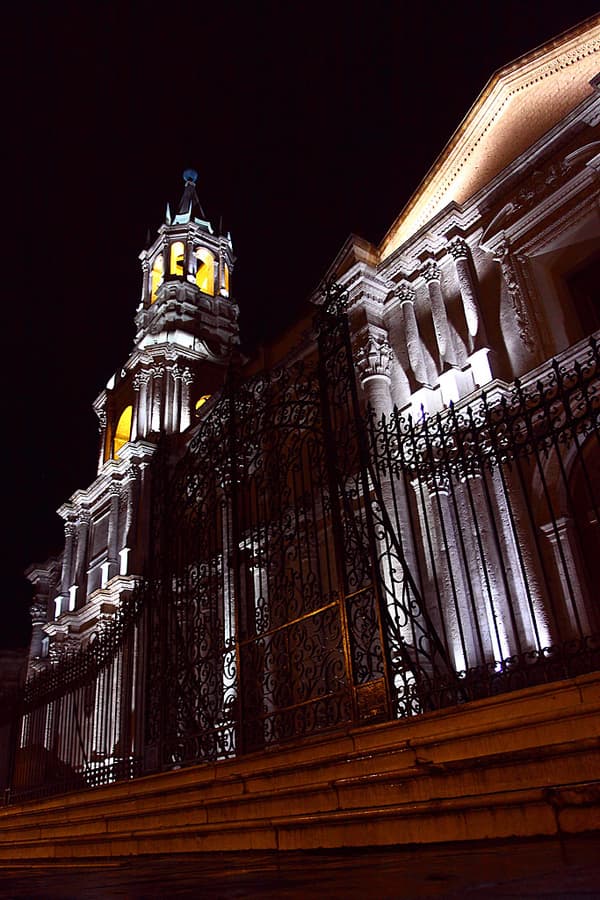
The jewel of the Plaza de Armas
Arequipa Cathedral dominates the entire north side of the Plaza de Armas with a 130-meter facade that is the longest of any cathedral in Peru. Built in white volcanic sillar, in neoclassical style with baroque details, the cathedral not only defines the urban space of Arequipa — it is the image with which the world identifies the city. The two twin towers flanking the central facade, the three-arch portal, the hand-carved sillar reliefs: the entire building speaks of centuries of work by Arequipeño craftsmen who turned the white stone of Chachani into the city's most recognizable monument.
Construction history
The history of the cathedral is the history of Arequipa itself: construction, destruction, and reconstruction. The first church on the site dates from 1544, just four years after the founding of the city. It was destroyed in the 1582 earthquake and rebuilt. Destroyed again. The version closest to the current one was consecrated in 1847, after the previous church was consumed by fire in 1844. But the earthquake of 1868 — the great quake that flattened the historic center — brought down one of the towers. Reconstruction of both towers extended well into the 20th century, and it was not until the 21st century, after the damage from the 2001 earthquake, that the complete restoration of the building was concluded.
The interior
The cathedral's interior houses 16 side chapels dedicated to different devotions, each with its own style and period. The main organ, Belgian, from the 19th century, is one of the largest in South America and has been recently restored — hearing it at a Sunday mass is one of Arequipa's most remarkable acoustic experiences. The high altar is made of Carrara marble brought from Italy in the 19th century. Paintings from the Cusco School of the 17th and 18th centuries adorn the walls and chapels. The cathedral museum on the upper floors — paid access — displays colonial silver pieces, liturgical ornaments, and historical documents.
Practical visit
The cathedral is open every day. Entry to the main nave is free. The museum on the upper floors has paid access and is worth it for the colonial silver collection and the bell tower climb. The best time to photograph the facade is early morning, when sunlight hits the white sillar directly from the east — between 8:00 and 10:00 the photos are exceptional. In the afternoon the facade is in shadow, but the artificial night illumination creates the effect that gives the most recognized image of Arequipa.
Style
Neoclassical baroque
Material
White sillar
Facade
130 metros
Organ
Belgian, 19th century
Climb the bell tower
Climb the bell tower for the best view of the Plaza de Armas with El Misti in the background — few tourists make the effort.