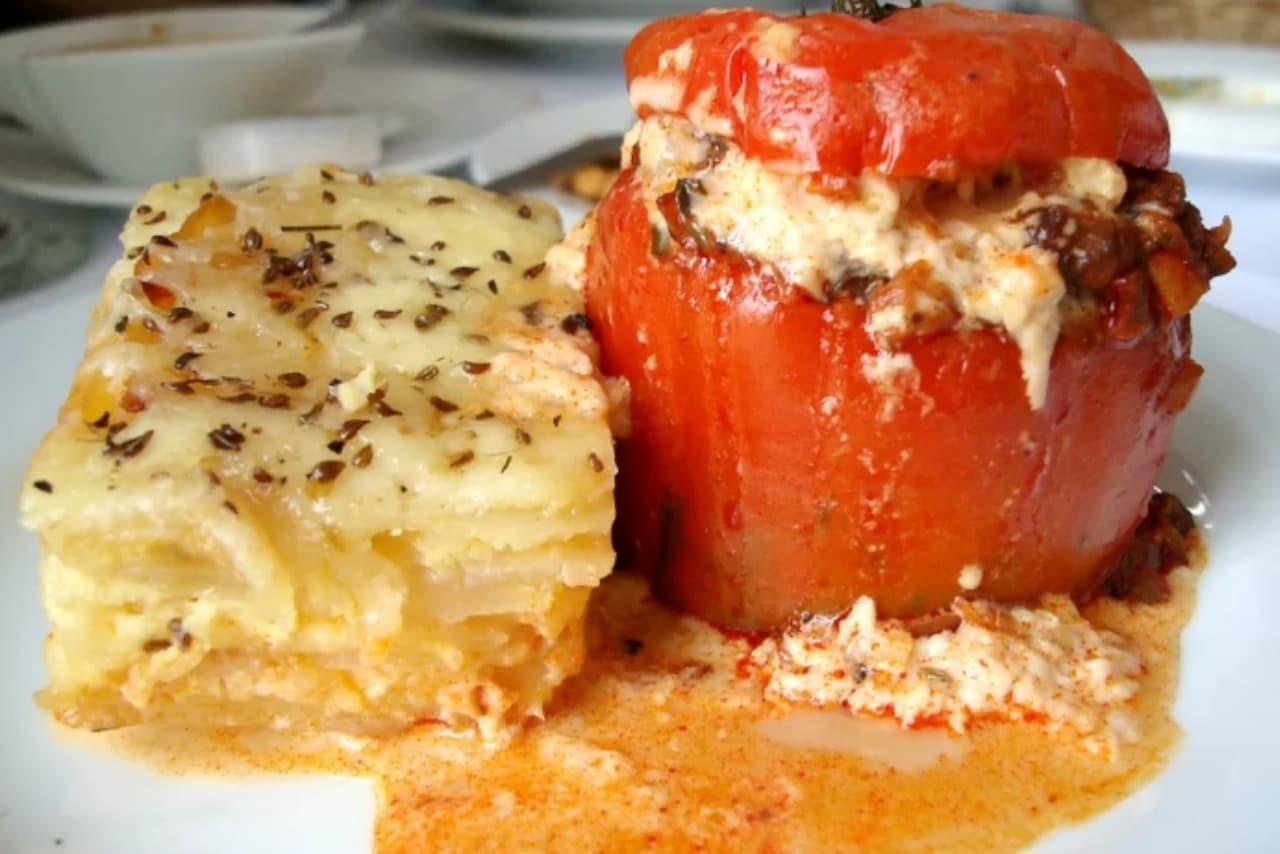
What Is Rocoto Relleno?
Rocoto relleno is Arequipa's defining dish: a whole rocoto pepper (Capsicum pubescens) split at the top, seeded, soaked in salted water, stuffed with a spiced meat filling, sealed, and baked in a cream sauce until bubbling. The pepper and the method are specific to Arequipa. The rocoto (Capsicum pubescens) is a different species from most chilis — it has thick flesh, black seeds, and a fruity heat that hits seconds after the first bite. It grows at altitude, primarily in the Arequipa valley and surrounding highlands. Unlike jalapeño or serrano, it cannot be easily grown at sea level — the altitude is part of its character. The dish is not an appetizer. It's a main. It arrives in a clay pot or ceramic casserole, alongside — always alongside — a square of pastel de papa: potato gratin baked with cream, egg, and cheese. You eat them together. That combination is the dish.
The Preparation
The preparation is meticulous. The pepper is first seeded and de-veined (the heat is concentrated in the membrane, not the flesh), then soaked in multiple changes of salted water for 24–48 hours. This step is essential: it reduces the capsaicin level without eliminating the distinctive rocoto flavor. Shortcuts here are detectable — an under-soaked rocoto burns without flavor. The filling is ground beef browned with onion, garlic, ají panca (mild dried chili), cumin, and black pepper, then combined with hard-boiled egg, raisins (pasas), peanuts (maní), and black olives. The balance of sweet (raisins) against savory (beef) against heat (ají) is the rocoto relleno's internal architecture. The stuffed pepper is sealed with egg white and nestled into a casserole of cream sauce (leche evaporada, eggs, cheese). It bakes until the top is golden and the cream has thickened around it. The pastel de papa bakes simultaneously in the same oven.
Variations by Picantería
No two picanterías make rocoto relleno exactly alike. The variables are significant. Filling ratios differ: some picanteras use more pasas (raisins) for sweetness; others reduce them for a drier, more savory result. The soaking time varies — a less-soaked rocoto has more heat, and some picanterías consider this a feature rather than a defect. The cheese on top varies: some use queso fresco (fresh, mild), others use a harder aged variety that browns better. Seafood variations exist (shrimp or scallop filling instead of beef) at coastal-influenced picanterías. There is a cheese-only vegetarian version — less common but available if requested in advance. The correct approach is to eat rocoto relleno at multiple picanterías over multiple visits and form an opinion about which version is best. This is not idle advice — it's the assignment.
How to Order It
Order at lunch, never dinner. Picanterías close by 3–4pm and do not serve rocoto relleno in the evening — it's a dish that requires morning preparation and a full lunch service. Walk in by 1pm at the latest. Sit down. Ask what they have today. When you order, say: "Un rocoto relleno con pastel, por favor." If you want to signal heat preference: "No muy picante" (not too spicy) or "bien picante" (full heat). Eat the rocoto and the potato gratin together — alternating bites of the spiced pepper with the cooling cream potato. Drink chicha de guiñapo alongside: the drink's mild acidity and earthiness complement the dish better than any wine or beer. Do not leave Arequipa without eating rocoto relleno at least three times. The first is discovery; the third is understanding.
Where to Find the Best
Not at tourist restaurants near the Plaza de Armas. The best rocoto relleno in Arequipa is found in picanterías in Sachaca, Tiabaya, and Yanahuara's outer streets. These are family operations — four tables, a wood fire in the kitchen, a daughter who serves while her mother cooks. They have no English menus, no TripAdvisor stickers, no signage visible from the main road. Finding them requires asking locals or consulting expat Facebook groups (search "mejores picanterías Arequipa" in the Arequipa expat and living groups). The further from the tourist center, generally the better the rocoto. In Sachaca, you can visit 8–12 picanterías within walking distance — spend a week in Arequipa and eat your way through them systematically.
Cultural Significance
Rocoto relleno is present at every moment in Arequipeño life that matters. The city's Aniversario (August 15) is celebrated with rocoto relleno at family tables across Arequipa. Baptisms, graduations, family Sundays — wherever Arequipeños gather for a meal that matters, rocoto relleno is the organizing dish. It does not appear at these occasions because it is elaborate; it appears because it is correct. The identity of Arequipeño cuisine is inseparable from this dish: the heat of the rocoto, the sweetness of the raisins, the cream of the potato gratin. Understanding Arequipa as a city means understanding what it has chosen as its defining food, and what that food contains: intensity, precision, and refusal to compromise.
Heat level
High — hotter than jalapeño
Classic filling
Beef, raisins, peanuts, egg, olives
Served with
Pastel de papa (potato gratin)
Best at
Picanterías — never tourist spots
Origin
Arequipa, colonial era
Price
S/.18–30 in a picantería
Why the Arequipa rocoto is different from every other
The rocoto pepper (Capsicum pubescens) is a different species from most chilis — it has black seeds, thick flesh, and a fruity heat that hits after the first bite. The Arequipa variety grows at 2,000–3,000m altitude, producing a pepper with higher capsaicin concentration than coastal varieties. The preparation process involves soaking in salt water for 24–48 hours to reduce heat without eliminating flavor. A properly prepared rocoto relleno is assertively spicy but not punishing — you can taste the beef, the raisins, the cheese. If it burns so much you can't taste anything else, the picantería shortchanged the soaking step.
The pastel de papa is not a side dish
Rocoto relleno is always served with pastel de papa — a baked casserole of sliced potato, cream, egg, and cheese. This is not an optional accompaniment. The combination is the dish: you eat a piece of rocoto and a piece of potato gratin together. The cream and starch temper the capsaicin of the pepper. The traditional proportion is one stuffed rocoto to a generous square of pastel. Order both or you're eating it wrong.