Base ingredient
Whole milk + cream
Main flavor
Cinnamon, coconut, vanilla
Contains cheese?
No — the name is historical
Presentation
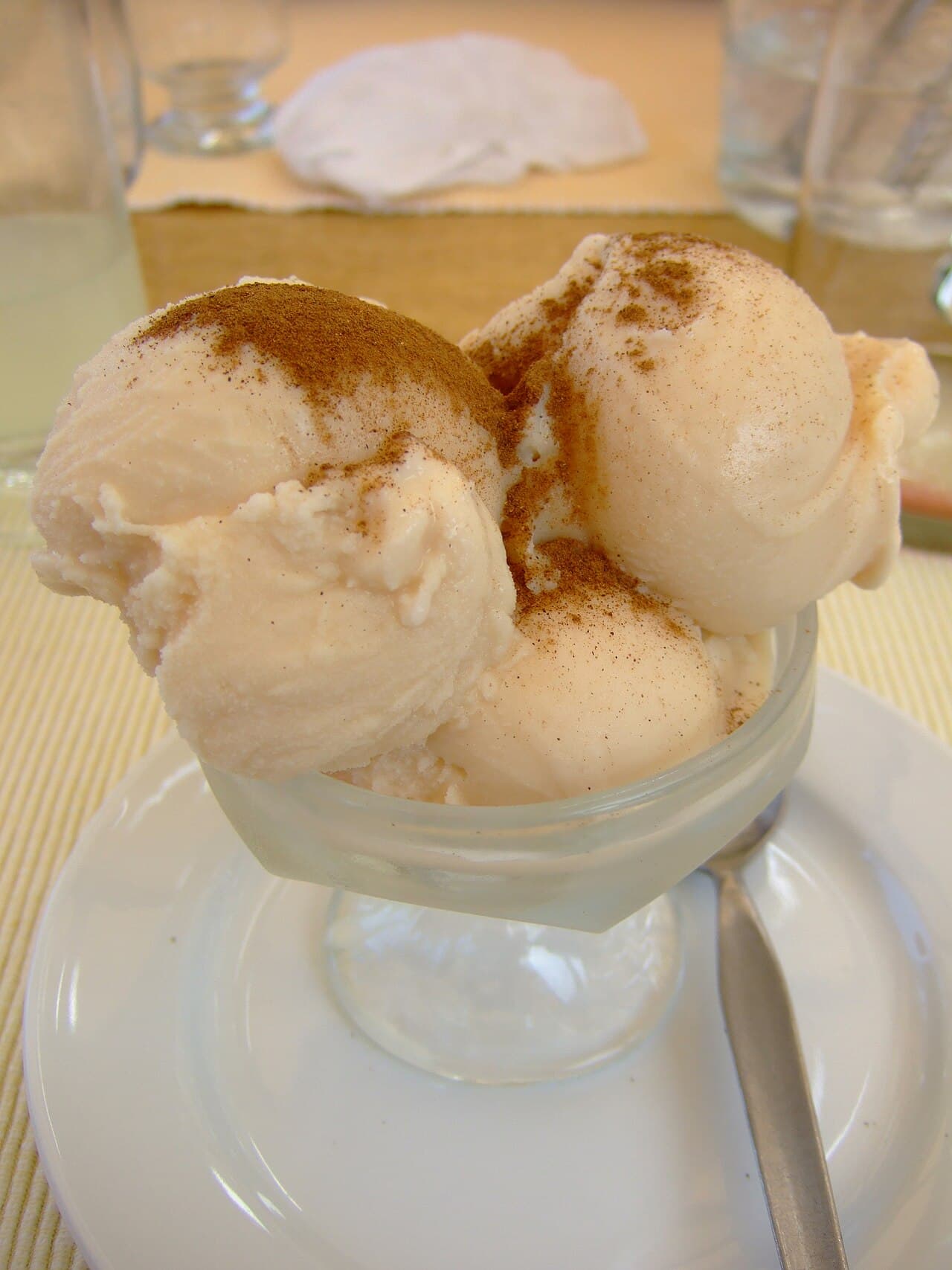
Dusted with ground cinnamon
Price
S/.2–5 per serving
Where to find it
San Camilo market, picanterías, street vendors
It's called cheese ice cream — but there's no cheese and it's not quite ice cream
Queso helado (literally 'frozen cheese') contains no cheese. The name comes from its appearance when sliced — the white frozen block with a layer of cinnamon on top resembles a wheel of fresh cheese. It's made from whole milk, cream, coconut milk, cinnamon, and vanilla, frozen in cylindrical molds and served in slices. The texture is denser than ice cream, creamier than gelato, with a stronger cinnamon presence than either. You find it everywhere in Arequipa: market stalls at S/.2 a slice, picantería dessert menus, dedicated vendors near the Plaza de Armas. It is Arequipa's most democratic food — cheap, universal, and genuinely delicious.
What It Is
Queso helado is Arequipa's signature dessert: a frozen milk confection made from whole milk, heavy cream, coconut milk, cinnamon, and vanilla, frozen in cylindrical molds until solid, then sliced and served dusted with ground cinnamon. It contains no cheese. The name — "frozen cheese" — comes from the visual resemblance of a freshly-sliced round of queso helado to a wheel of fresh white cheese (queso fresco): the same pale color, the same firm-yet-yielding texture, the same slight surface crust. Bite in and the resemblance ends: it is sweet, cold, and intensely flavored with cinnamon and coconut, with a denser texture than commercial ice cream and a creamier melt than gelato. The cinnamon is not a garnish — it is structural, running through the base and dusted on top in a layer thick enough to see. It is a dessert with specific intentions: comfort, sweetness, and a flavor profile that belongs entirely to Arequipa.
History
Queso helado has been made in Arequipa since at least the colonial era, though its exact origins are disputed. The most plausible account traces it to Arequipa's convent culture: the city's religious institutions (most famously the Santa Catalina Monastery) maintained dairy traditions, and the surplus of whole milk from convent herds was used to develop frozen dairy preparations. The coconut milk component suggests later influence from coastal trade routes. By the 19th century, queso helado was being sold by ambulant vendors throughout Arequipa's markets and plazas — the same distribution model that persists today. It has never been modernized or improved upon because it has never needed to be. The formula — whole milk, cream, coconut, cinnamon, vanilla — produces a result that successive generations of Arequipeños have confirmed is already correct.
Variations
The standard queso helado is white, cinnamon-dominant, with coconut milk present but not overwhelming. Variations exist but are secondary: chocolate queso helado (a cacao version found occasionally at market stalls) uses the same base with dark chocolate added, producing a denser, less sweet result. Fruit-flavored versions (strawberry, lucuma) appear at some vendors, made with fruit puree blended into the cream base. The coconut-dominant version versus the cinnamon-dominant version is the main internal debate among Arequipeños — some picanteras and vendors calibrate the coconut higher, others reduce it to a supporting role. The correct position on this question is a matter of personal taste, best resolved by eating enough queso helado to form an opinion.
Where to Find the Best
Queso helado is found throughout Arequipa, but quality varies significantly by source. The best versions: market stalls inside and around Mercado San Camilo (the vendors here make fresh batches, price at S/.2–3 per slice, and sell what they've made that day — not frozen stock from the week before). Picantería dessert menus (the picantera makes her own queso helado; it's usually the same recipe used by her mother and grandmother). Street vendors near major churches on Sunday mornings (especially after mass, when the demand is highest and the freshness most reliable). Worst: hotel buffet versions, tourist restaurant dessert menus, and anything sold in a branded commercial container. The commercial queso helado sold in Lima supermarkets bears a name-only relationship to the Arequipa original.
When to Eat It
Queso helado is appropriate at any hour and in any context. It is a dessert at picanterías — served after the chupe de camarones and before coffee. It is a snack at the market — bought standing at the stall, eaten immediately before the slice softens. It is a Sunday-morning treat for children after mass. It is what vendors sell outside the Chapi sanctuary on pilgrimage days. Eat it immediately after it's sliced — queso helado softens quickly at room temperature, and the optimal texture is cold enough to hold its shape but not hard enough to require effort. Two minutes after slicing is the window. Buy and eat.