How to Use This Guide
This is not a ranked list of picanterías with addresses and ratings. Picanterías open, close, change hands, improve, and decline — any list with specific names is outdated within six months. What doesn't change is the geography and the method. This guide gives you a framework: where the picanterías concentrate, how to navigate to them, what to do when you arrive, and what to order. Use this guide in combination with current local intelligence — the expat Facebook groups for Arequipa are the most reliable real-time source of "best picanterías right now." This guide tells you how to get there and what to do. The groups tell you which specific one is best this month.
Sachaca — The Highest Concentration
Sachaca is the historic heart of Arequipa's picantería culture. It is a district southwest of Yanahuara, roughly 15 minutes by taxi from Yanahuara's main square (S/.8–12). The main strip of Sachaca — along and near Avenida Sachaca — has 8–12 picanterías within walking distance of each other. This proximity is not accidental: Sachaca was historically the peri-urban zone where working-class Arequipeños lived and where women who had been cooking for their communities formalized that cooking into small food establishments. Today the zone is more urban but the picanterías persist, often in the same family for three or four generations. The Sachaca lunch circuit is one of the best ways to spend a weekday in Arequipa: take a taxi to Sachaca at noon, walk the strip, choose the one with the longest local queue, eat until 2pm, take a taxi back.
The Tiabaya Road
The road toward Tiabaya, southwest of Sachaca, has older and more rustic picanterías than anywhere else in the city. These are establishments that have been in the same family for two or three generations, operating from what look like private homes — because they are. The dining rooms are small, the kitchen is literally the family kitchen, and the food is the kind that comes from a family that has been making these dishes for decades without interruption. Prices are often lower than Sachaca. The experience is more intimate. Getting there without local knowledge is difficult (there are no signs, no Google Maps listings, no social media presence). The method: ask a Sachaca picantera to recommend a good one on the Tiabaya road. They will tell you, and the recommendation will be honest.
Yanahuara — More Accessible, Still Authentic
Yanahuara has picanterías on its outer streets — not the tourist-facing Avenida Lima (which has restaurants and cafés for the expat crowd), but the residential streets that branch off from it. These picanterías are more accessible for first-time visitors and expats who haven't yet built Sachaca and Tiabaya into their routines. They're slightly more expensive than Sachaca, slightly less rustic, but still fully authentic — the same lunch-only service, no printed menus, chicha as welcome, dishes determined by what was cooked that morning. The expat Facebook groups reliably post Yanahuara picantería recommendations; these tend to be the entry-level recommendations for people new to the city. Start in Yanahuara, then work your way to Sachaca and Tiabaya as you get more comfortable.
What to Order — The Canonical Lunch
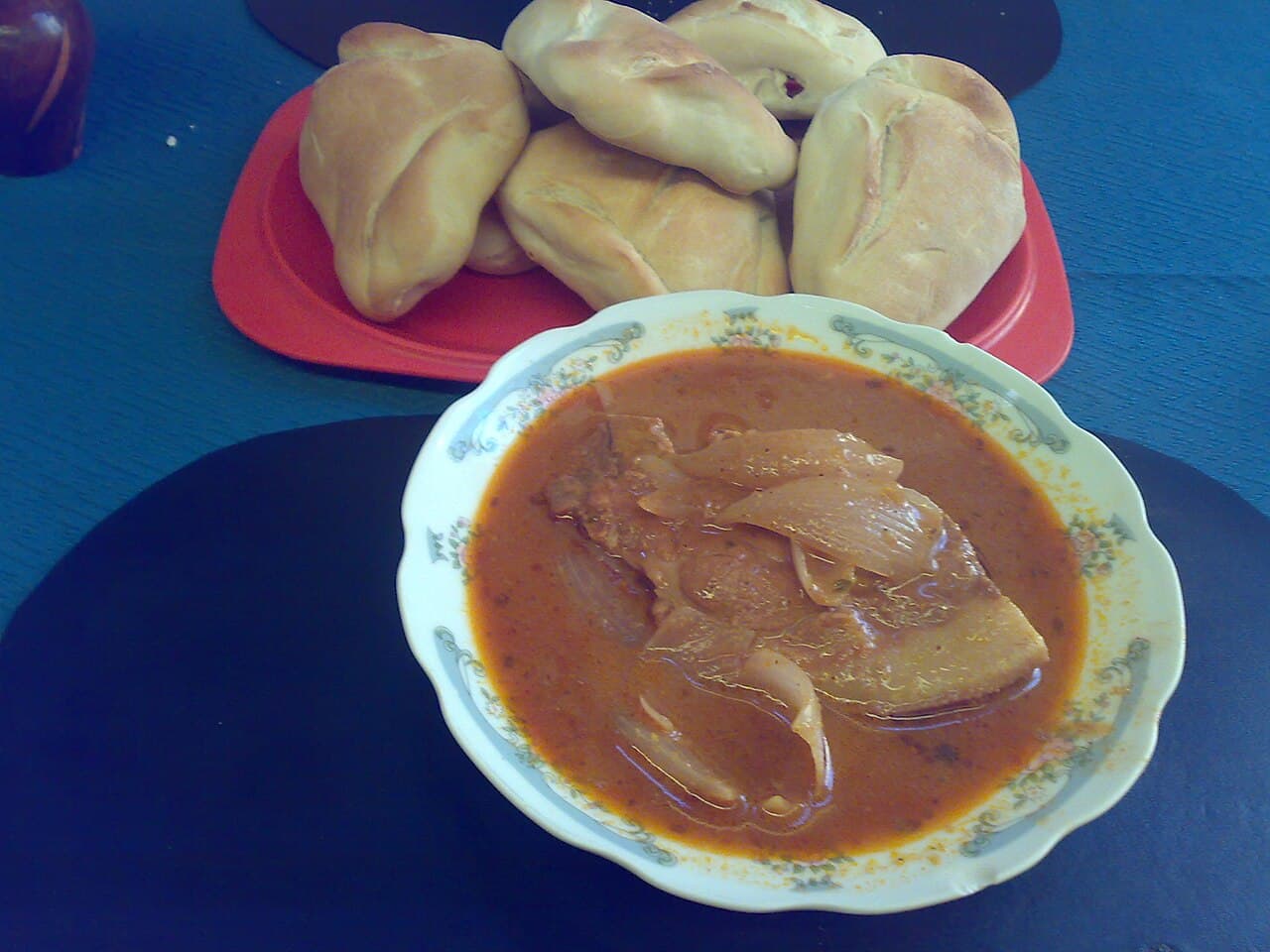
The correct order at a picantería, if you want to eat the full canonical meal for two people: chicha de guiñapo as welcome (the picantera offers; accept). Rocoto relleno con pastel de papa as the main event — one plate between two, or one each if you're hungry. Chupe de camarones as the soup course — one pot between two is usually enough. Queso helado as dessert — it arrives in slices, always. Total cost: S/.70–100 for two people including chicha. Total food: enough for the rest of the day. Do not order everything on the available list. The picantería serves a set meal, not à la carte accumulation. The order above is the sequence: chicha → rocoto → chupe → queso helado. The picantera will serve in this sequence if you let her.
Talking to the Picantera
Three phrases that get you good food and good standing at any picantería:
"¿Qué tiene hoy?" — What do you have today? Ask this first, before attempting to order anything.
"¿El rocoto está muy picante?" — Is the rocoto very spicy? This is a legitimate question; heat levels vary. A good picantera will tell you honestly.
"Un cuartillo de chicha, por favor" — A glass of chicha, please. Ordering the chicha before anything else signals that you understand the institution. It will be noticed.
If you become a regular at a picantería, the picantera will begin recommending dishes before you sit down. She will remember if you liked the adobo or preferred the chupe. She will tell you when the shrimp are particularly good this week. This is the goal. Getting there takes three or four visits.
Picanterías in Arequipa
50+ active (approximate)
Highest concentration
Sachaca, Tiabaya, Yanahuara
How to find them
Locals, expat Facebook, smell
Opening days
Monday to Friday (generally)
Quality signal
Queue of locals at 12:30pm
Payment
Cash preferred, some take card
The best picanterías are not in the tourist zone
No picantería worth your time has a menu in English, a TripAdvisor sticker, or a view of the Plaza de Armas. The best ones are in Sachaca (15 min taxi from Yanahuara), along the old Tiabaya road, and on the outer streets of Yanahuara and Cayma. These are family operations — four tables, a wood fire in the kitchen, a daughter who serves while her mother cooks. Finding them requires asking locals. The expat Facebook groups maintain active lists of current favorites. Use them.
How to judge a picantería in 60 seconds
Walk in at 12:30pm. If it's half-empty, keep walking. Good picanterías fill up fast with local workers, families, and the regulars who've been coming for decades. Look in the kitchen if you can see it — is there a big pot of chupe on the fire? Are the picanteras (the cooks) older women? Good signs. Is there a handwritten chalkboard with today's dishes? Even better. Sit down, ask for the chicha, and ask what's good today. You'll know within five minutes if you're in the right place.