The Dish Defined
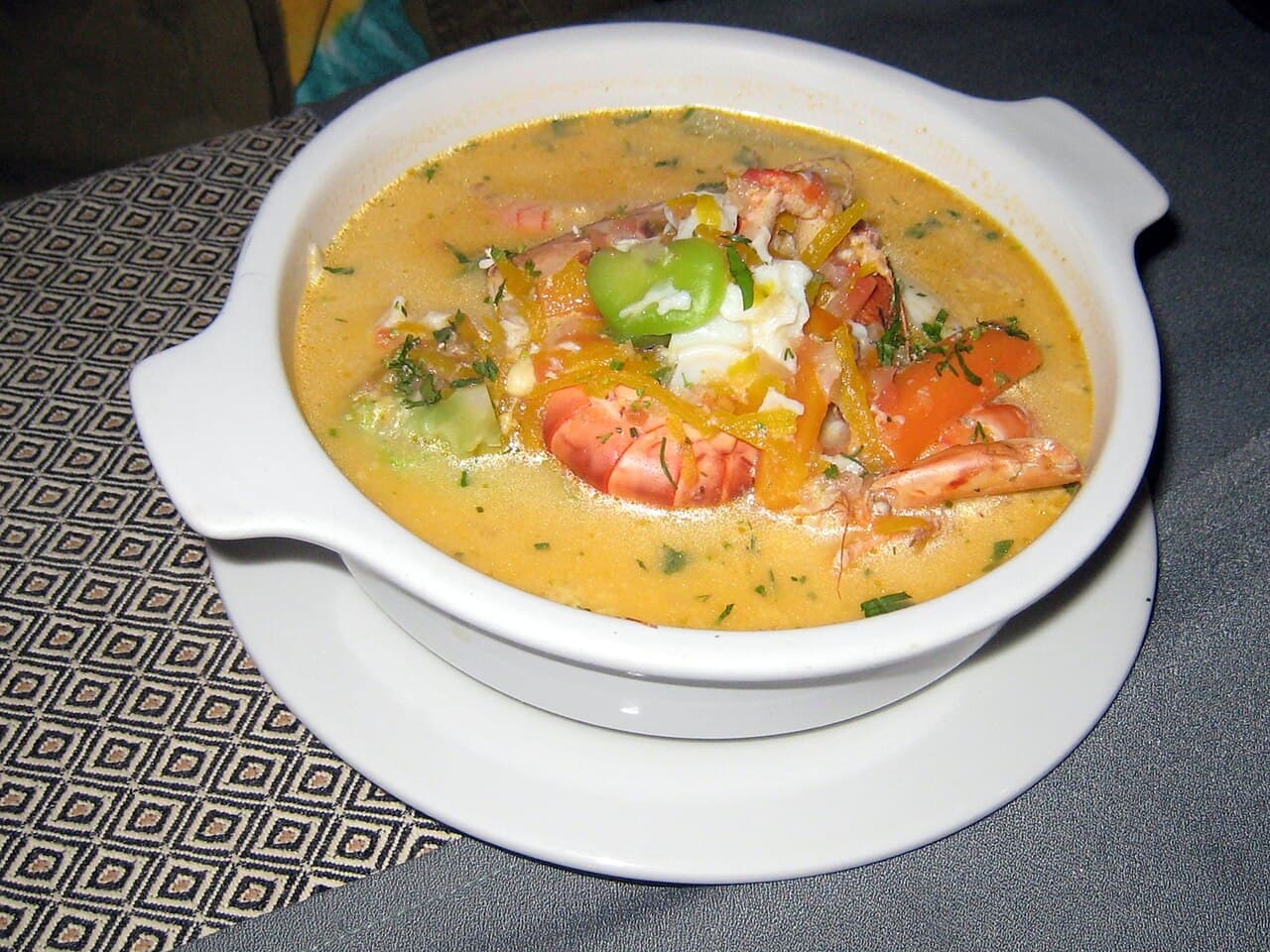
Chupe de camarones is Arequipa's great soup — and "soup" undersells it. It arrives in a clay pot (or deep ceramic bowl) that barely fits the table: a dense, orange-red broth the color of ají amarillo, opaque with cream, crowded with ingredients. In the pot: whole freshwater shrimp from the Río Chili (heads attached, which is correct), wedges of potato, sections of corn on the cob, fava beans (habas), a poached or fried egg, and a square of white cheese (queso fresco). The broth is built on evaporated milk, fresh cream, and ají amarillo paste — yielding a flavor that is simultaneously rich, spiced, and faintly sweet from the corn. It is a full meal for one person or a generous shared dish for two. The picantera takes it off the heat at the moment the shrimp are just cooked through, not a moment later. Overcooked shrimp in chupe is the mark of a careless kitchen.
The Río Chili Shrimp
The camarones in Arequipa's chupe are freshwater shrimp from the Río Chili — the river that originates at the snowmelt of Volcán Chachani and runs directly through the city of Arequipa. These are not the ocean shrimp found in ceviche or elsewhere in Peru. They belong to a different genus (<em>Cryphiops caementarius</em>, locally called "camarón de río arequipeño"), with thicker shells, a minerally sweetness, and a flavor that absorbs the ají amarillo cream base differently from any marine shrimp. They cannot be meaningfully substituted. The Río Chili shrimp has a defined season: roughly May through December. From January to April, the river swells with Andean rainy season runoff, making shrimping impractical and legally restricted. Restaurants that serve chupe during January–April are using frozen camarones, often imported. The difference in flavor between fresh seasonal and frozen out-of-season is not subtle. Ask before you order.
The Preparation
The chupe base is built in layers. First, a sofrito of onion, garlic, and ají amarillo paste. Then the shrimp shells and heads are added to the pot with water, simmering to create a stock — the shells carry the mineral depth. The milk and cream go in next, turning the broth from clear to the characteristic orange-cream color. The shrimp tails are added in the final minutes, along with the potato (pre-cooked), corn (partially cooked), fava beans, and a whole egg that poaches in the broth. The queso fresco is added at the last moment. The result is a single-pot dish where every ingredient is cooked to exactly the right point — the shrimp just opaque, the potato yielding but intact, the egg white set and yolk still soft. The sequence and timing are what separate a good chupe from an excellent one.
How to Eat It
Eat the whole shrimp. Crack the heads (they contain fat and flavor), suck the head, peel the tail. Break the corn off the cob into the broth. Eat the egg by pressing the yolk into the soup and mixing it into the cream base — it enriches the broth. The queso fresco absorbs the broth and softens; eat it with the shrimp in the same spoonful. Finish the broth with torn bread, if the picantería offers it. Do not order a main course afterward — chupe de camarones at a picantería is enough food for the meal. If you're sharing one between two, that is correct. The standard serving is generous. Drink chicha de guiñapo alongside: the mild acid of the fermented corn complements the cream broth without competing with it.
Where to Find the Best
The best chupe de camarones in Arequipa is at picanterías that make it fresh each day from seasonal camarones. Ask before you order: "¿Son frescos los camarones?" A good picantería will tell you honestly. The picanterías in Sachaca and along the historic stretch toward Tiabaya have traditionally been the strongest for chupe — they're in proximity to the river and have sourcing relationships with the shrimpers. The picanterías in Yanahuara are more accessible but slightly further from the river source. The worst places to order chupe: tourist-facing restaurants near the Plaza de Armas, which almost always use frozen camarones year-round. If the restaurant has a photo of the dish on an outdoor sign, walk past it.
The Out-of-Season Question
If you're visiting Arequipa in January, February, March, or April, chupe de camarones is available at most restaurants — but it will not be the same dish. The frozen camarones imported from the coast or Ecuador have a different texture (softer, less mineral), absorb the broth differently, and cannot replicate the flavor of a fresh Río Chili shrimp. The good picanterías acknowledge this and often remove chupe from the daily rotation during rainy season rather than serve an inferior version. If you visit off-season, the correct move is to order rocoto relleno, adobo, and soltero de queso — all of which are excellent year-round — and save the chupe for a second visit during shrimp season. It is worth returning for.
Shrimp
Río Chili — seasonal May–Dec only
Base
Evaporated milk, cream, ají amarillo
Includes
Potato, corn, egg, cheese, fava beans
Price
S/.25–40 in a picantería
Best season
Jul–Nov (shrimp at peak)
Off season
Available frozen (lower quality)
The shrimp come from one river — and only in season
Arequipa's chupe de camarones is made with freshwater shrimp (camarones de río) from the Río Chili — the river that runs through the city. These are not ocean shrimp. They're a different genus, with a minerally, slightly sweet flavor that absorbs the ají amarillo cream base differently than any marine variety. The shrimp season runs roughly May to December. In January–April (rainy season), the river is swollen and turbid — shrimping is restricted. If you order chupe during these months, it was frozen. Ask whether the camarones are fresh (frescos) before ordering.
This is a meal, not a soup
Chupe de camarones is not a starter. It's a full meal served in a clay pot: a thick, orange-red cream broth built on ají amarillo and evaporated milk, filled with whole shrimp (heads on), potato chunks, corn on the cob, fava beans, egg, and cheese. A standard serving at a picantería is enough for two people who haven't come hungry. Order one and share, or come with serious appetite. Do not order a main course afterward.