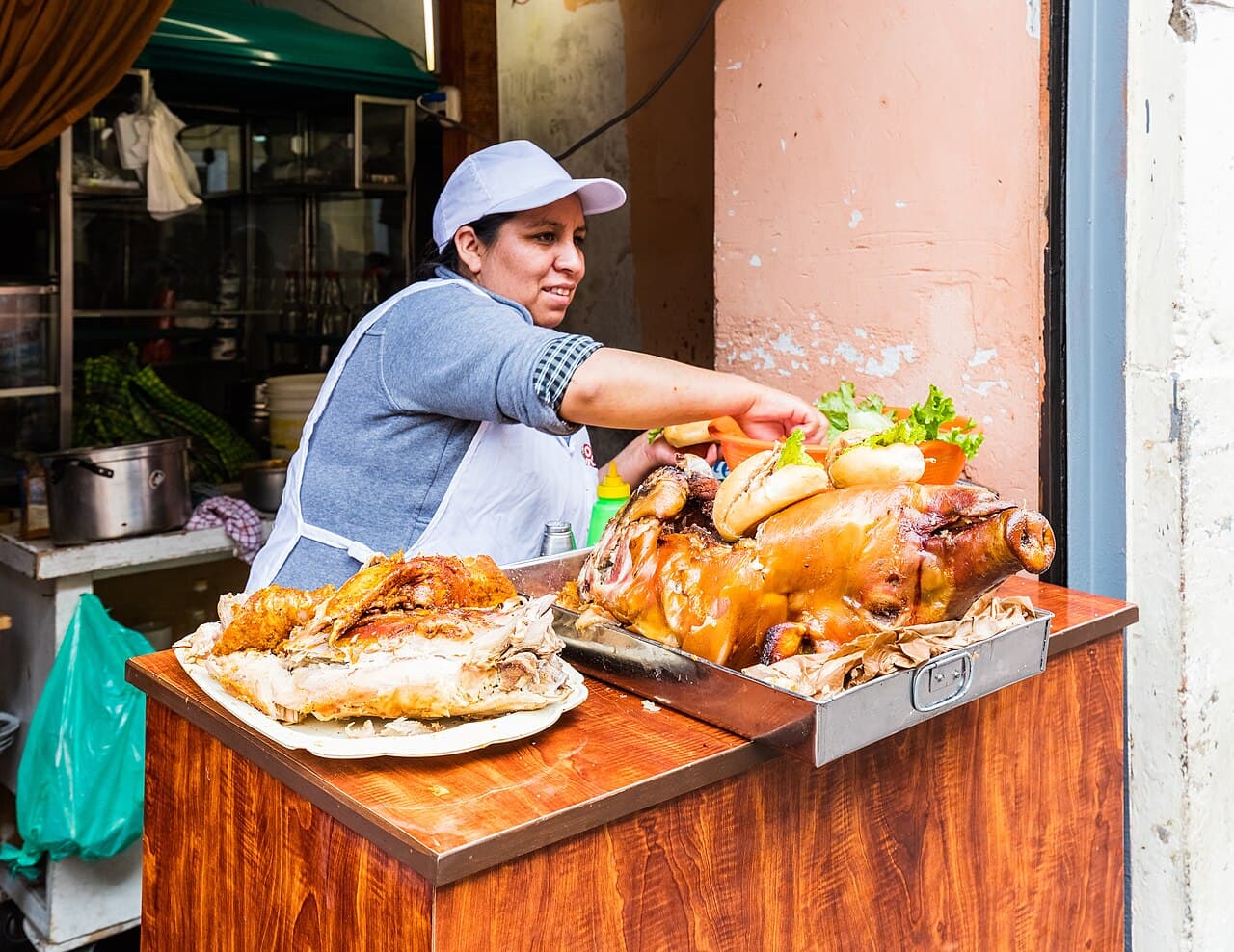
Arequipa's Street Food Culture
In Arequipa, the divide between restaurant food and street food is blurrier than in most Peruvian cities. Street food is not a category for people who can't afford restaurants — it's a parallel food culture with different foods, different moments, and different social functions. The queso helado vendor outside the market serves the same clientele as the picantería around the corner. The anticucho cart at 6pm serves Arequipeños who had lunch at a proper restaurant at noon. Informal eating is central to the city's food identity, not marginal to it. Knowing when and where to eat informally — rather than seeking a restaurant for every meal — is one of the marks of someone who understands Arequipa. The city rewards flexibility about where to eat almost as much as it rewards knowing what to eat.
Morning — The Juice Circuit
The morning street food moment runs from 6am to about 10am. At the San Camilo market, the juice stalls open first, serving fresh-squeezed combinations (papaya-orange, pineapple-ginger, maracuyá) alongside pan de tres puntas and queso fresco for S/.8–12. Outside the market, empanada shops open at 7am — these are baked, not fried, filled with spiced beef or vegetable, and eaten warm. The bread vendors who supply the restaurants and the homes make their morning rounds. The market's produce section is at its freshest and least crowded between 7 and 9am. At street stalls around the market perimeter, vendors sell fresh fruit cups (papaya, mango, watermelon sliced and sold in bags) and boiled corn (choclo with cheese). Morning eating in Arequipa is lighter and cheaper than any other meal of the day.
Midday — The Market Stalls
From 10am to 2pm, the prepared food stalls inside San Camilo's interior activate. These are not the same as picanterías — they're faster, slightly cheaper, and serve individual dishes from a rotating daily menu. The format: a vendor has three or four dishes ready (seco de carne, aji de gallina, rice, beans, soup of the day), you point, they plate, you pay S/.10–15. The quality is honest without being exceptional. These stalls are where market workers eat, where downtown office workers on short lunch breaks eat, and where Arequipeños who want a meal without the commitment of a picantería eat. They are not the best food in Arequipa, but they are genuine and inexpensive.
Afternoon — Anticuchos and Queso Helado
The afternoon street food moment (3–8pm) is defined by two things: queso helado and anticuchos. Queso helado vendors appear throughout the day but intensify in the afternoon — outside San Camilo, near the major churches, along the main pedestrian streets. Buy a slice (S/.2–4), eat immediately. Anticucho carts appear around 5–6pm, parked on corners and in plazas, identifiable by charcoal smoke from a block away. The anticucho itself: thin-sliced beef heart on a wooden skewer, marinated in ají panca and vinegar, grilled over high heat until charred at the edges, served with a boiled potato on the side and a dollop of uchucuta (spicy peanut-chili sauce). Cost: S/.2–3 per skewer. Eat two or three. This is the correct afternoon snack in Arequipa.
Evening — Picarones and Empanadas
As it gets dark, the sweet vendors appear. Picarones are sweet potato and squash doughnuts — the dough is a mix of cooked camote (sweet potato), cooked zapallo (squash), yeast, and flour, fried in hot oil into rough rings, drizzled with miel de chancaca (raw cane sugar syrup). They appear outside churches on feast days and near markets on weekend evenings. Cost: S/.3–5 for a portion of three or four. Baked empanadas also appear in the evening at dedicated empanada shops and street stalls — fresh batches come out of the oven every 30–45 minutes. The arequipeño empanada is baked (not fried), filled with spiced ground beef, olive, and egg.
What to Avoid
The tourist-facing food vendors near the Plaza de Armas sell inferior food at elevated prices. This is not a hygiene warning — it's a quality and value observation. The anticucho cart on a side street in Miraflores serves better food than the tourist-oriented "anticucho restaurant" near the Plaza de Armas. The queso helado from the San Camilo market vendor costs S/.2 and is made that day; the queso helado from a tourist café on the plaza costs S/.8 and is not. Navigate by where Arequipeños are eating, not by where tour guides direct you.
Iconic street snack
Queso helado (S/.2–4)
Street breakfast
Juices + bread (S/.8–12)
Anticuchos
Beef heart skewers, afternoon/evening
Picarones
Sweet potato doughnuts, S/.3–5
Arequipa empanadas
Baked, spiced filling, S/.3–5
Most active zone
Around San Camilo, Historic Center
The anticucho cart is your evening signal
When the anticucho carts appear on the streets around 5–6pm, Arequipa's late afternoon begins. Anticuchos are beef heart skewers marinated in ají panca and vinegar, grilled over charcoal, served with a potato and a dollop of spicy peanut sauce. The heart is cut thin, the charcoal is hot, the smoke is visible from a block away. They cost S/.2–3 per skewer. You eat them standing at the cart. This is not a concession to poverty — Arequipeños who eat at the best picanterías also eat anticuchos from street carts. It's one of the great pleasures of the city's informal food culture.