Climbing Volcán Misti: The Complete Guide (And What Nobody Tells You)
Misti stands at 5,822 meters and is visible from all of Arequipa. Summiting it is one of the most powerful experiences you can have in the Andes — if you know how to prepare. Here is everything you need to know.
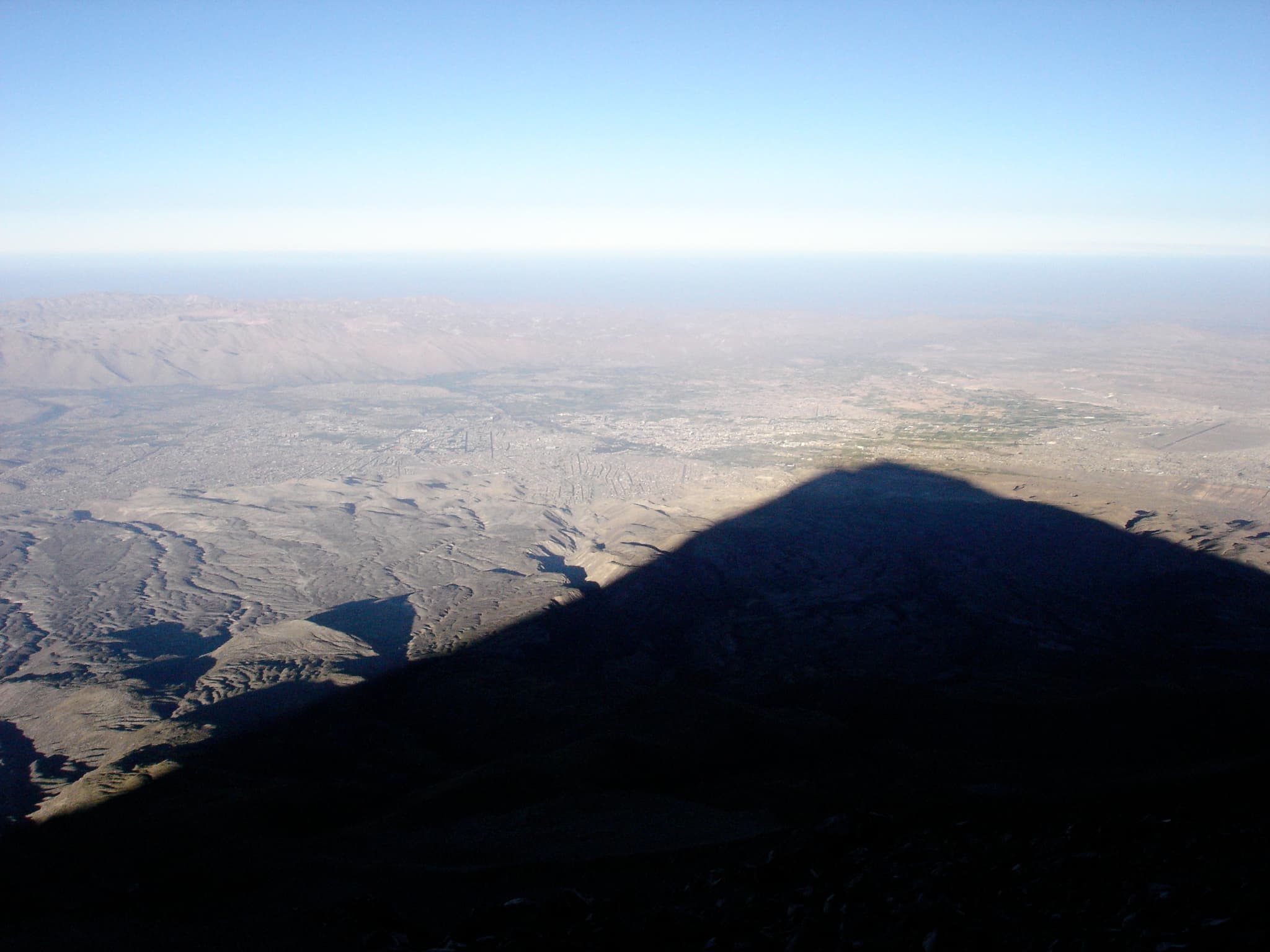
It is 2:30 in the morning and we have been walking for five hours. The headlamp illuminates barely two meters of volcanic slope. The thermometer reads -8°C. And somewhere between the exhaustion and the cold, the sky begins to open — first pink, then orange, then gold — and suddenly you understand why thousands of people climb Misti every year. There is no way to describe that sunrise from the summit of a volcano looking down at your own city.
Basic facts you need to know
Volcán Misti stands at 5,822 meters above sea level. It is an active stratovolcano — the last recorded eruption was in 1985, though there is continuous fumarolic activity in the crater. The normal route from Campamento Pastores (3,800m) to the summit takes 6-9 hours ascending and 3-4 hours descending. It requires no technical climbing equipment but does require good physical fitness and acclimatization.
The optimal season runs from May to November (dry season). During the rainy season (December to March) the route can be dangerous due to ice and reduced visibility.
Misti does not demand technique — it demands honesty. If your fitness is not there, the volcano tells you before it is too late.
The acclimatization question (do not ignore this)
This is the most common mistake: arriving in Arequipa (2,335m) and attempting Misti the next day. Arequipa itself is already considerable altitude. You need at minimum 3-4 days in the city before attempting Misti. Better still: do a preliminary excursion to Chachani (6,057m, technically harder but with progressive acclimatization) or at least walk the first kilometers of the Chili river trail up to the Yanahuara viewpoint.
What to bring (the real list, not the tourist list)
Vibram-soled mountain boots, not trail runners. Three upper layers: thermal base, fleece mid-layer, waterproof windshell. Double gloves (one light, one snow). Wool hat covering ears. Balaclava. Headlamp with spare batteries (battery drains fast in cold). Trekking poles. Minimum two liters of water plus electrolytes. High-energy snacks every 45 minutes. Ibuprofen for altitude headache. And coca — in leaf form, not candy, to chew during the ascent.
Guide: yes or no
The Misti route is technically not legally required with a guide, but I strongly recommend one for anyone without high-altitude experience. Not because of the path itself — which is well-marked — but because of safety decisions at the summit (the crater has unstable zones) and because a good local guide knows the day's conditions that no app can predict. Certified Arequipa guides cost between $40 and $80 USD per person in small groups — a fraction of any mountain outing in the Alps or Patagonia.
Did you enjoy this story?
Share it with someone who loves Arequipa.
Have your own Arequipa story?
Submit an article →