The oldest neighborhood
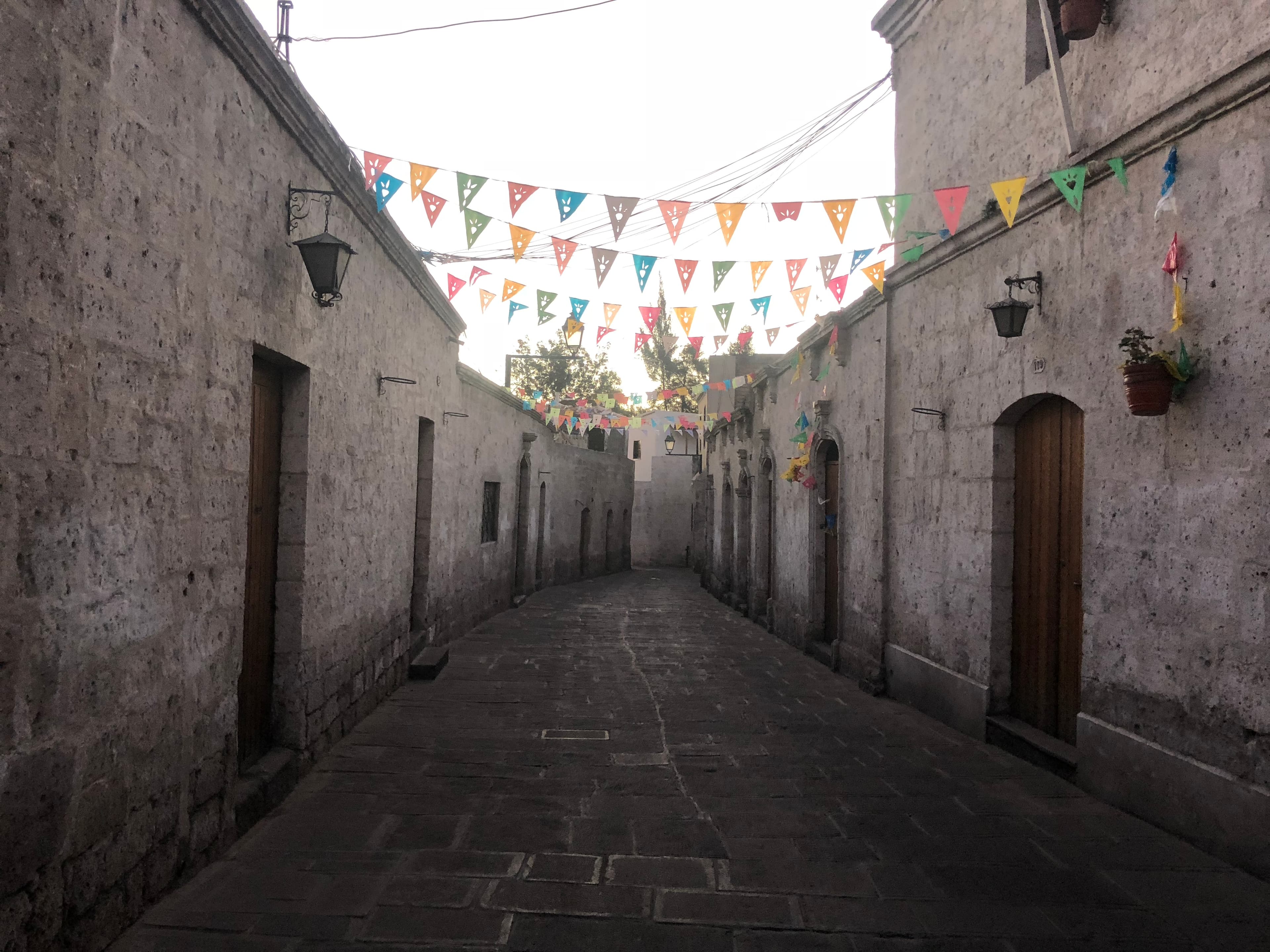
San Lázaro is the oldest neighborhood in Arequipa — older even than the city itself. Before the official founding of Arequipa on August 15, 1540, the first Spanish settlers had already established themselves in this sector, which at that time served as a leper colony. San Lázaro is the patron saint of lepers in the Christian tradition, hence the name. The neighborhood was the first Spanish settlement in the valley and preserves alleyways and sillar structures that have not substantially changed in more than 400 years. Some of the sillar walls of the neighborhood's houses are the oldest in the entire city.
Sillar alleyways
What distinguishes San Lázaro from any other neighborhood in Arequipa is its network of alleyways — streets so narrow that in many cases they do not allow a car to pass. These streets are built in white sillar, with walls on both sides that in some cases are 4 or 5 meters high. Walking through them is a temporal experience: the sillar has not changed, the scale has not changed, the quiet has not changed. Some alleyways are open; others are semi-private passages between houses. The texture of the neighborhood — the aged sillar, the dark wooden gates, the ferns growing in the walls — cannot be fully photographed: you have to be there.
The Church of San Lázaro
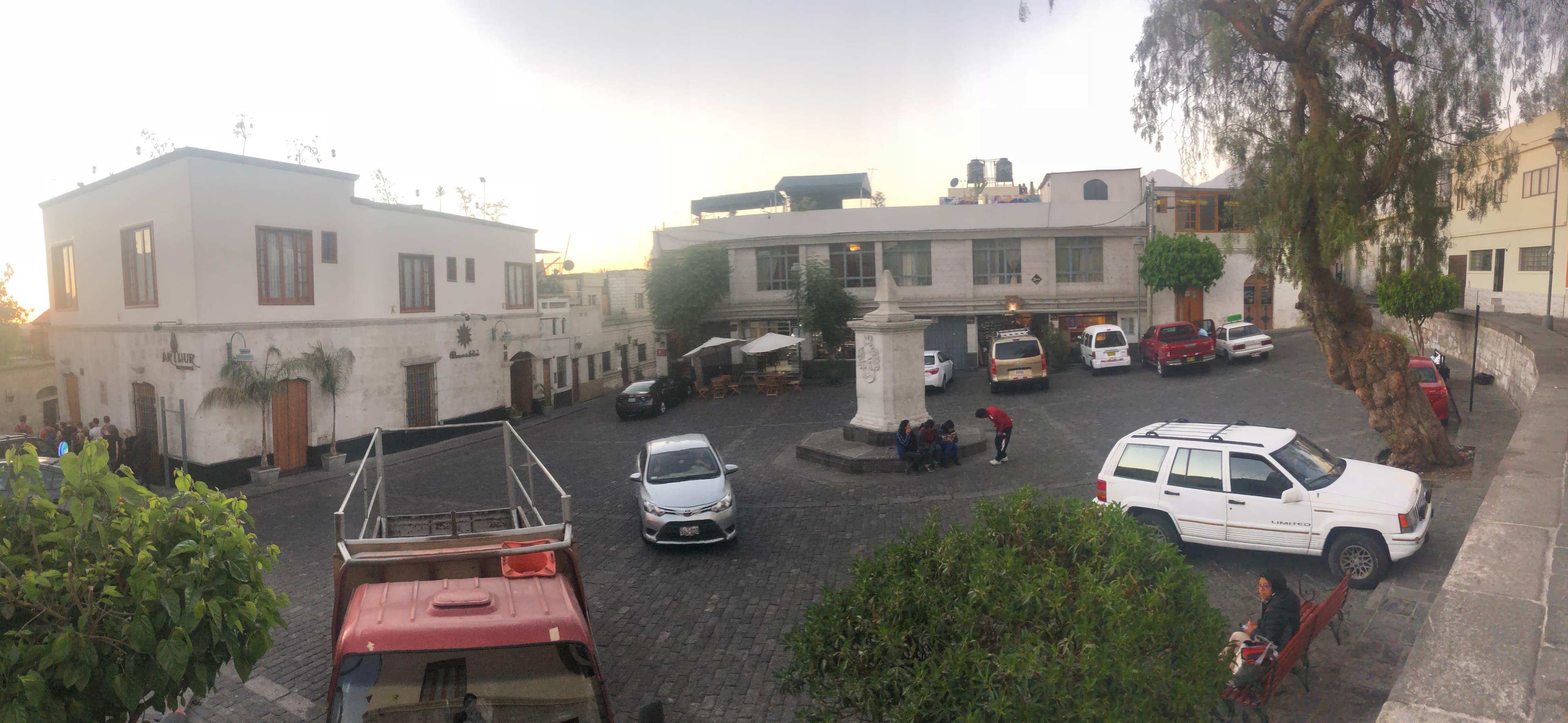
The Church of San Lázaro is the oldest in Arequipa, built in the 16th century shortly after the city's founding. Its facade is significantly simpler than those of the great baroque churches of the historic center — there is none of the exuberant ornamentation of the Cathedral or the Compañía de Jesús. What it has is the gravity of age: it is the first permanent church erected in this valley, and its porous sillar walls have absorbed four centuries of masses, processions, and earthquakes. For those who value history over spectacle, it is worth the visit.
How to visit
San Lázaro is a 5-minute walk from the Plaza de Armas — but almost no tourist makes it there. Go up Calle Ugarte from the plaza heading north, cross the Grau bridge, and follow the small streets that climb up the embankment. The best time to visit is early morning or late afternoon, when the lateral sunlight illuminates the sillar walls in a way that does not happen at midday. The neighborhood is quiet, residential, and safe. There are no cafés or tourist shops — that is exactly the reason to go.
Foundation
16th century (before 1540)
Origin
Leper colony
From Plaza
5 min walk
Feature
Sillar alleyways
The alleyway that doesn't appear on maps
Look for the Callejón de los Suspiros — a street so narrow and so ancient that it seems suspended in time. It does not appear on tourist maps.