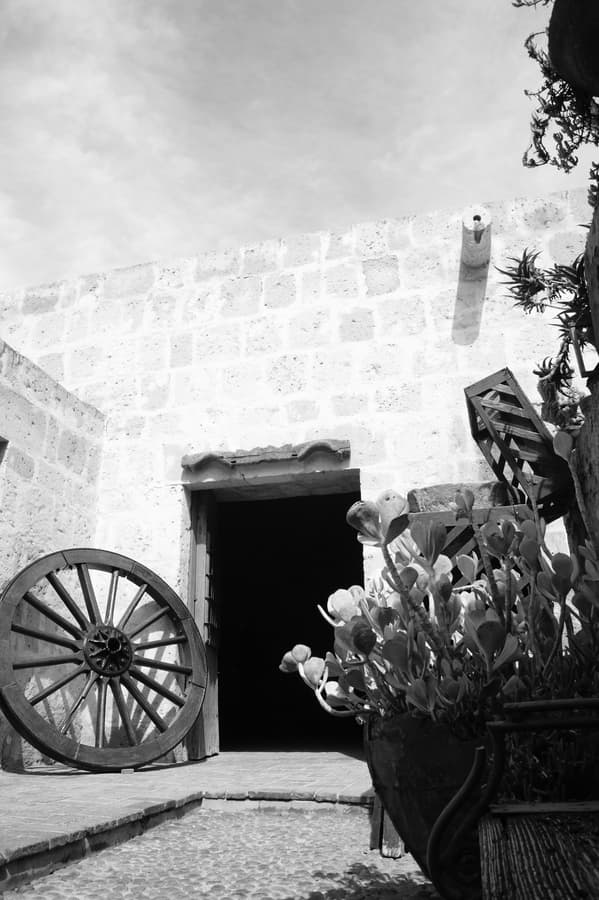
Arequipa's historic center was built almost entirely from sillar — a white volcanic tuff quarried from the flanks of the volcanoes that surround the city. It's porous, easily carved, excellent at thermal insulation, and extraordinary to look at: warm white in the morning, gold at noon, and blush pink as the sun drops. In 2000, UNESCO declared the historic center a World Heritage Site, citing its "exceptional example of a fusion of Spanish and local architectural traditions." This walk is the way to understand what that means.
What Sillar Is
Volcanic tuff — solidified volcanic ash and rock debris ejected from Chachani and Misti over hundreds of thousands of years. Softer than granite (can be carved with hand tools), structurally sound, and quarried continuously from the Añashuayco quarry northwest of the city since the 17th century. The same stone from the same geological source has built Arequipa for 400 years.
Mestizo Baroque
Arequipa's signature architectural style — Spanish Baroque forms (twisted columns, elaborate facades, curved pediments) executed by indigenous Andean craftsmen who incorporated local iconography (pumas, condors, native flowers, pre-Columbian geometric patterns) into the decorations. The result is unlike anything in Spain or in other colonial cities. La Compañía de Jesús has the finest example in South America.
The Self-Guided Route (2–3 hours, all free exterior viewing)
- Plaza de Armas: start at the Cathedral's east facade. The twin sillar towers (1656–1875, rebuilt after earthquake) frame the city. The interior is free to enter — 20 min. The arcades on three sides of the plaza are colonial commercial buildings still in active use.
- La Compañía de Jesús (south side of plaza): the most ornate Baroque facade in Peru. Jesuit, built 1698. Every surface carved — twisted columns, reliefs of angels, the sun, indigenous flowers. Stand back and look at it in total before approaching for details.
- San Agustín Church (Calle San Agustín, 2 blocks east): less visited, equally remarkable portada (carved doorway) — the Mestizo Baroque style at its purest, with pumas and condors in the stonework.
- Santa Catalina Monastery exterior (Calle Santa Catalina): even the exterior wall is monumental — 100m of unbroken sillar stone, 6m high, blood orange painted. The entrance facade is itself worth stopping for.
- Calle Santa Catalina (the street): residential facades, artisan workshops, the play of light on carved doorways that changes every hour of the day.
- San Lázaro neighborhood (10 min walk NE of the plaza): oldest streets in Arequipa, cobblestones, houses built directly against volcanic rock outcrops. No tourists. An entirely different century from the plaza.
- Yanahuara arcade (20 min walk west, or taxi S/.5): the colonial arches that frame Misti — sillar construction 1897, inscribed with poetry. The walk ends with the best view in the city.
Photography Advice
Eastern-facing facades (Cathedral, La Compañía east side) photograph best in the morning, 8–11am. Western facades best at 4–6pm. The sillar is warmest-toned in the 45 minutes after sunrise and before sunset — the "golden hour" effect is pronounced with this stone.
UNESCO designation
2000 (Historic Center)
Building material
sillar (volcanic tuff from Chachani)
Oldest buildings
17th century
Architectural style
Mestizo Baroque
Walk duration
2–3 hours (7 stops)
Best photography light
8–11am or 4–6pm
The vocabulary that unlocks the facades