The Arequipa You Eat Standing Up: Anticuchos, Picarones, and the Ritual of the Night
When the picanterías close and the sun drops behind Chachani, another Arequipa appears: anticucho carts smoking in Plaza San Francisco, pans of picarones by the river, and glasses of hot emoliente for two soles. Street food is not a lesser plan here: it is where the city gathers after work.
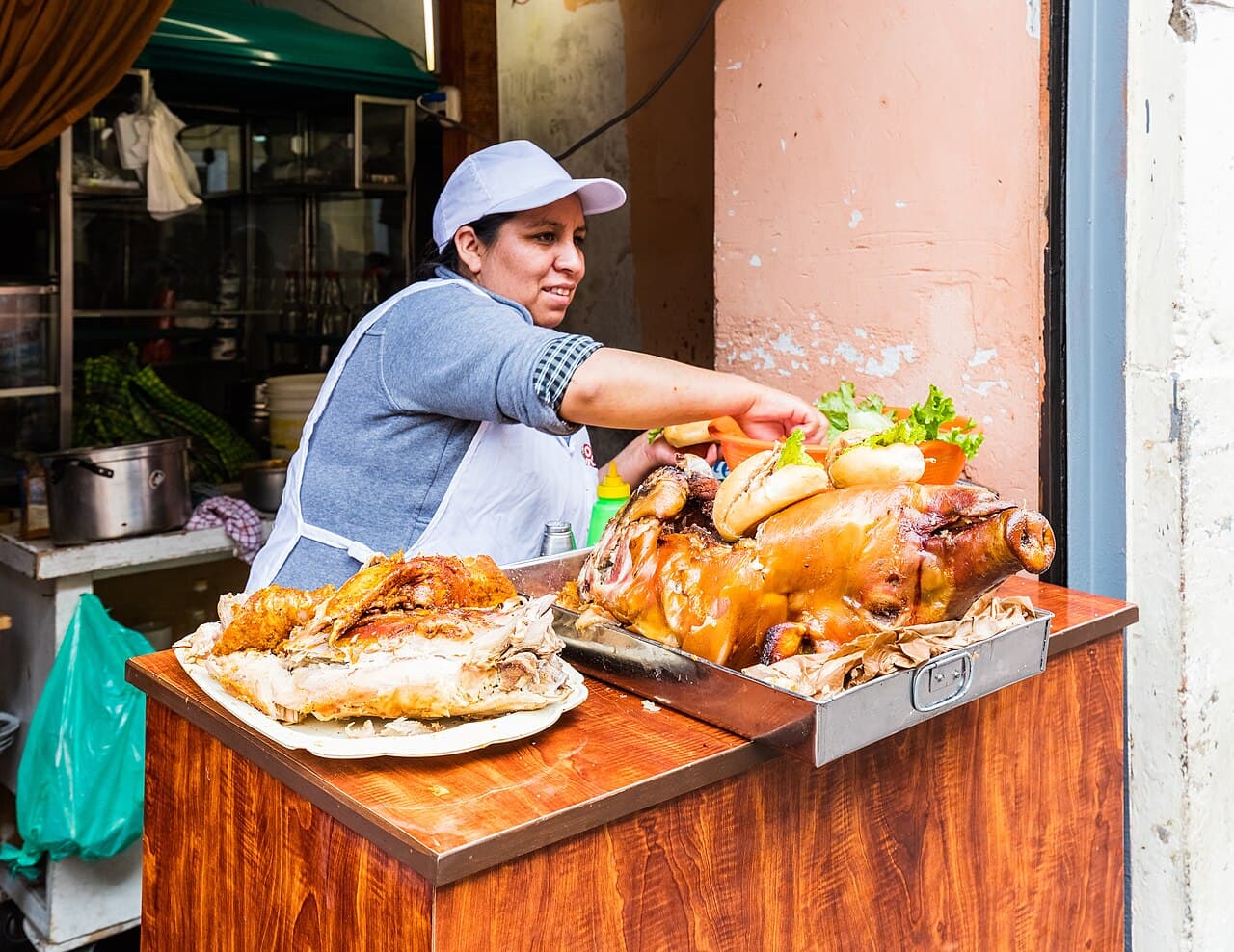
There is an Arequipa that appears in no picantería guide or award-winning restaurant list: the one you eat standing up, on the pavement, after dark. It begins around six in the evening, when the anticucho carts are pushed by hand to their usual corners, Plaza San Francisco, the lower block of Calle Zela, the exit of La Merced, and the charcoal is lit. By seven, smoke smelling of cumin and ají panca drifts half a block, and around each cart a standing semicircle forms: office workers just off the job, students from San Agustín university, families who walked over from the neighbourhood. Nobody sits down. You eat leaning on a park railing or at the edge of the kerb, and that is exactly the point.
The Anticucho: Heart, Charcoal, and Two Skewers
The Arequipa anticucho is beef heart marinated in ají panca, vinegar, cumin, and garlic, threaded onto cane skewers and grilled over charcoal until the edges caramelise. It comes with a boiled potato and a piece of corn, both passed briefly over the grill to pick up the smoke, and two sauces: a creamy ají amarillo and a green huacatay salsa. One skewer costs between S/ 8 and S/ 12 depending on the cart and the thickness of the heart; with two skewers, potato, and corn, a person eats well for S/ 15. The best-known anticucheras in the centre work around Plaza San Francisco and Calle Piérola; many have held the same corner for decades and regulars call them by name. The key is to arrive early. Good heart runs out, and by nine at night the best carts are scraping the last batch off the grill.
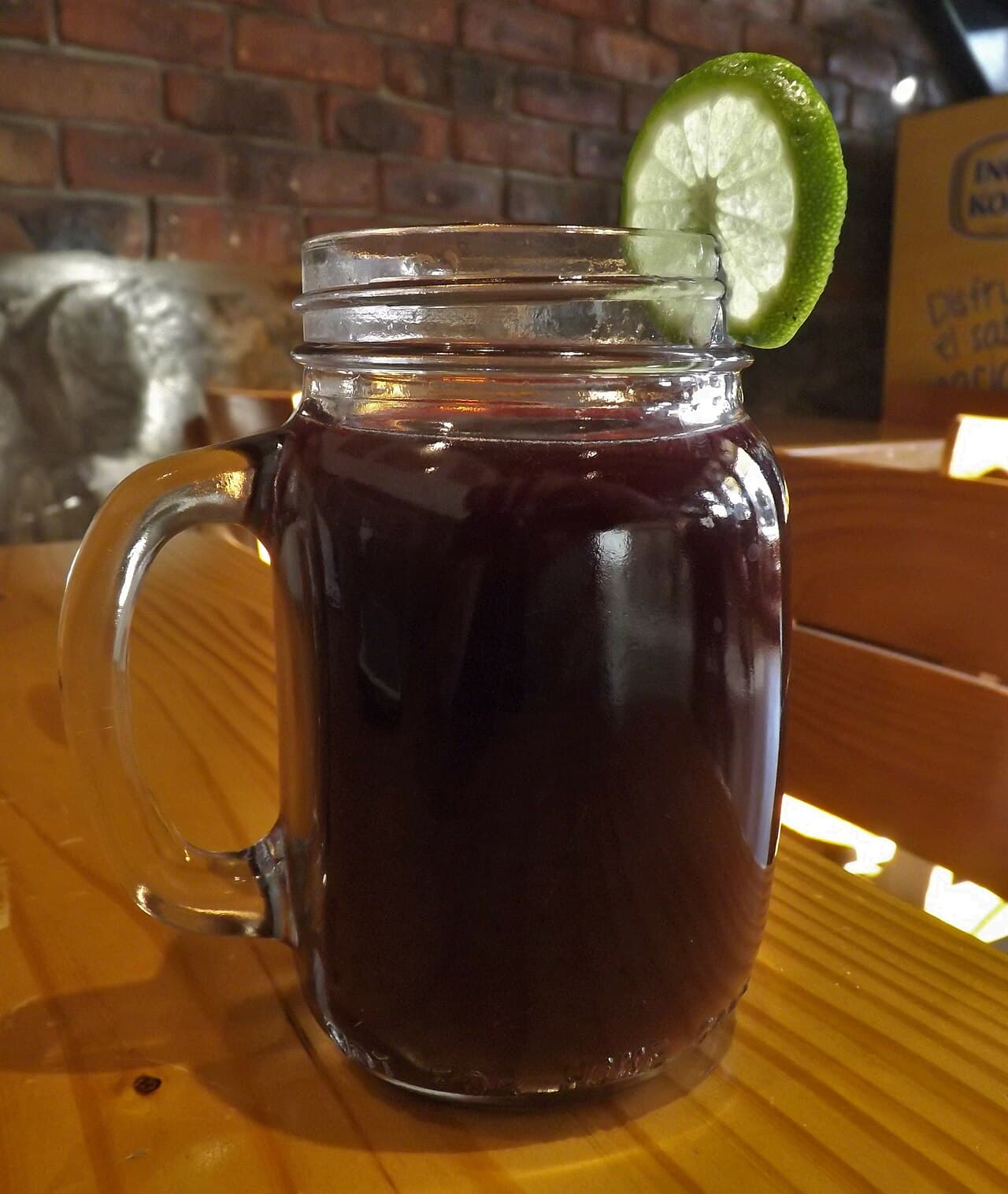
A whole catalogue of grill and pan food orbits the anticucho. There are salchipapas, fries with sausage, egg, and a battery of sauces, costing between S/ 7 and S/ 9 and the standard student plan. There is pan con chicharrón that some carts sell at weekends, and chicken brochettes for those who do not eat heart. But the anticucho's classic companion is not a dish: it is a glass of emoliente, the hot infusion of toasted barley, flaxseed, horsetail, and lime that the emolienteros pour from metal thermoses for S/ 2 or S/ 3. On a cool Arequipa night, and nearly all of them are, with the temperature dropping to 8 or 9 degrees after sunset, the emoliente is as much part of the ritual as the charcoal.
In Arequipa the best table often has no table at all: it is the edge of a pavement, a smoking cart, and a glass of emoliente to warm cold hands.
Picarones: The Dessert Fried Before Your Eyes
If the anticucho is the savoury dish of the street, picarones are its sweet close. They are fritters of squash and sweet-potato dough fried on the spot, the picaronera shapes the ring by hand, drops it into boiling oil, and turns it with a stick, and served drenched in chancaca syrup with a touch of cinnamon and clove. A portion is six picarones and costs between S/ 5 and S/ 6. Eating them fresh out of the oil, when the syrup is still warm and the dough crackles outside and stays airy inside, is a different experience from buying them packaged. The best picarón carts in the centre set up at night near the Plaza de Armas and on Avenida Ejército in Yanahuara, where the smell of chancaca competes with the anticuchos on the next corner. The queue in front of a good picaronera is its best recommendation: if ten people are waiting, stay.
How to Eat on the Street Without Going Wrong
Arequipa street food is safe if you apply the usual common sense: look for the carts with the most turnover, where the food does not sit still. A cart with a steady queue cooks and sells fast, and that is exactly what you want. Check that the charcoal is alive and the picarón oil looks clean and bubbling, not dark. Carry cash in small notes, almost no cart takes a card, or Yape for small amounts without change, and keep one-sol coins handy for the emoliente. The timing is sacred: between 18:30 and 21:30 is when everything is fresh and at its peak; later, the options thin out. And one last thing: eat standing, talk to whoever is next to you, and do not rush. In Arequipa, the corner cart is as much a meeting place as a place to eat, and that is the part you cannot pack to go.
喜欢这个故事吗?
分享给喜爱阿雷基帕的人。
你有自己关于阿雷基帕的故事吗?
投稿文章 →