Yura: The Thermal Baths Arequipeños Don't Share With Tourists
27 kilometers from downtown, at the foot of the Chachani volcano, the district of Yura hides thermal waters that have warmed the skin of generations of Arequipeños long before spas needed an English name to sound appealing. Nobody markets them as a tourist attraction. That is exactly why they remain authentic.
Almost every tourist who arrives in Arequipa hears about the Misti, the Colca Canyon, Santa Catalina. Almost none hear about Yura, a district roughly 27 kilometers northwest of downtown, a 40 minute drive uphill toward the Chachani volcano, where hot water has been coming out of the mountain long before anyone thought to sell it as a wellness experience. Arequipeños have gone for generations, in family groups, with a thermos of tea and containers of food, to spend a whole Sunday soaking.
Water born from a volcano, not a boiler
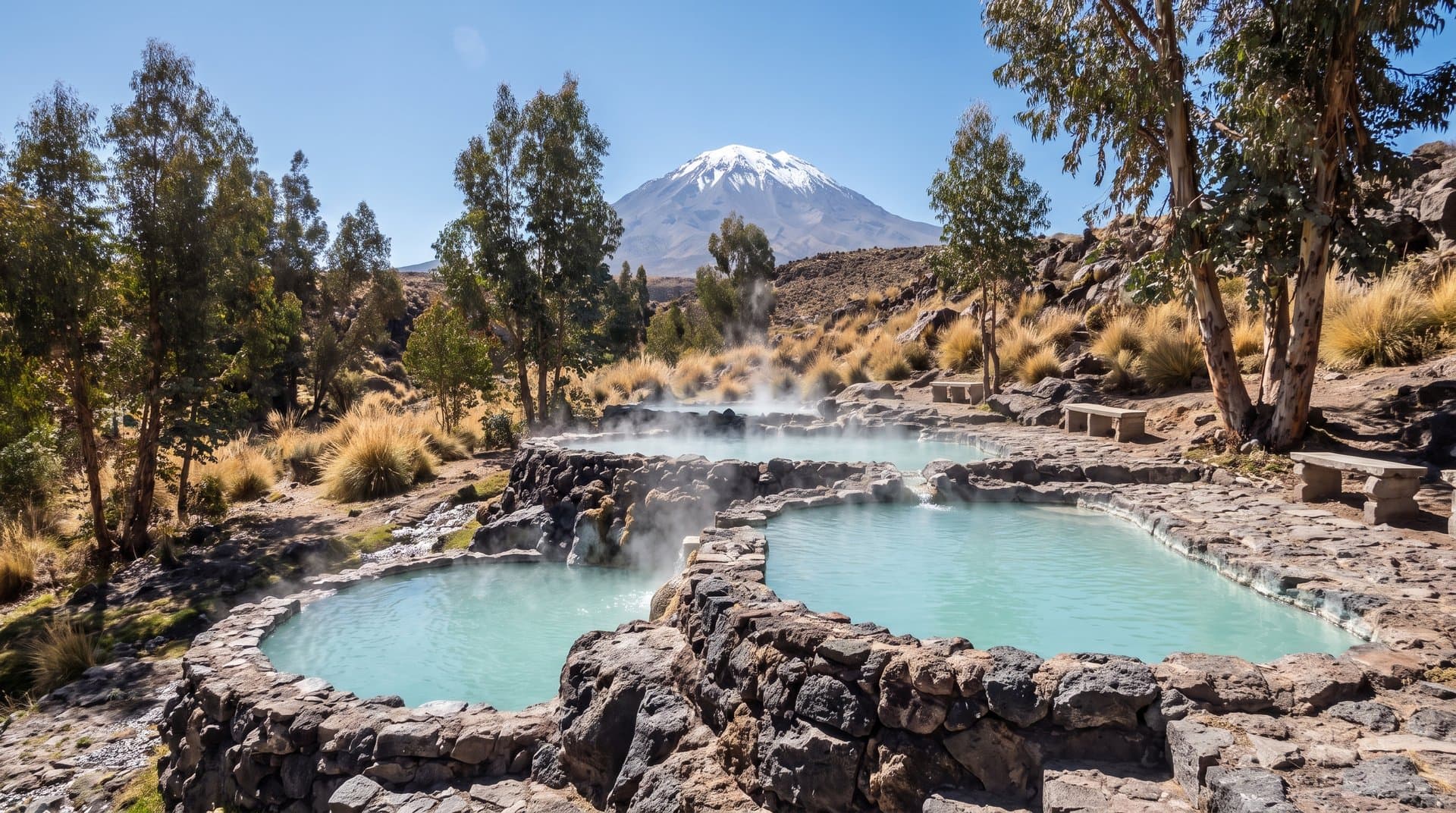
The Yura complex has several pools fed by natural springs at different temperatures, a direct result of the geothermal activity of the Chachani and its neighboring volcanoes. The water arrives loaded with minerals, mostly sulfur and iron, and carries the particular smell that gives away its underground origin. The women who go every week swear it helps with rheumatism and joint pain; doctors are more cautious, but nobody disputes that after half an hour in the hottest pool you walk out with red skin and loose muscles.
It is not a spa, it is a neighborhood pool that boils from the inside of the mountain, and that is exactly why it never needed advertising.
The infrastructure is plain: concrete pools, basic changing rooms, stone benches to sit in the sun between dips. There are no hot stone massages or white robes. There are entire families, elderly couples who have been going since the 1980s, and on weekends, enough people that it is worth arriving early, before ten in the morning, if you want a pool to yourself.
A town that lives off the water in other ways too
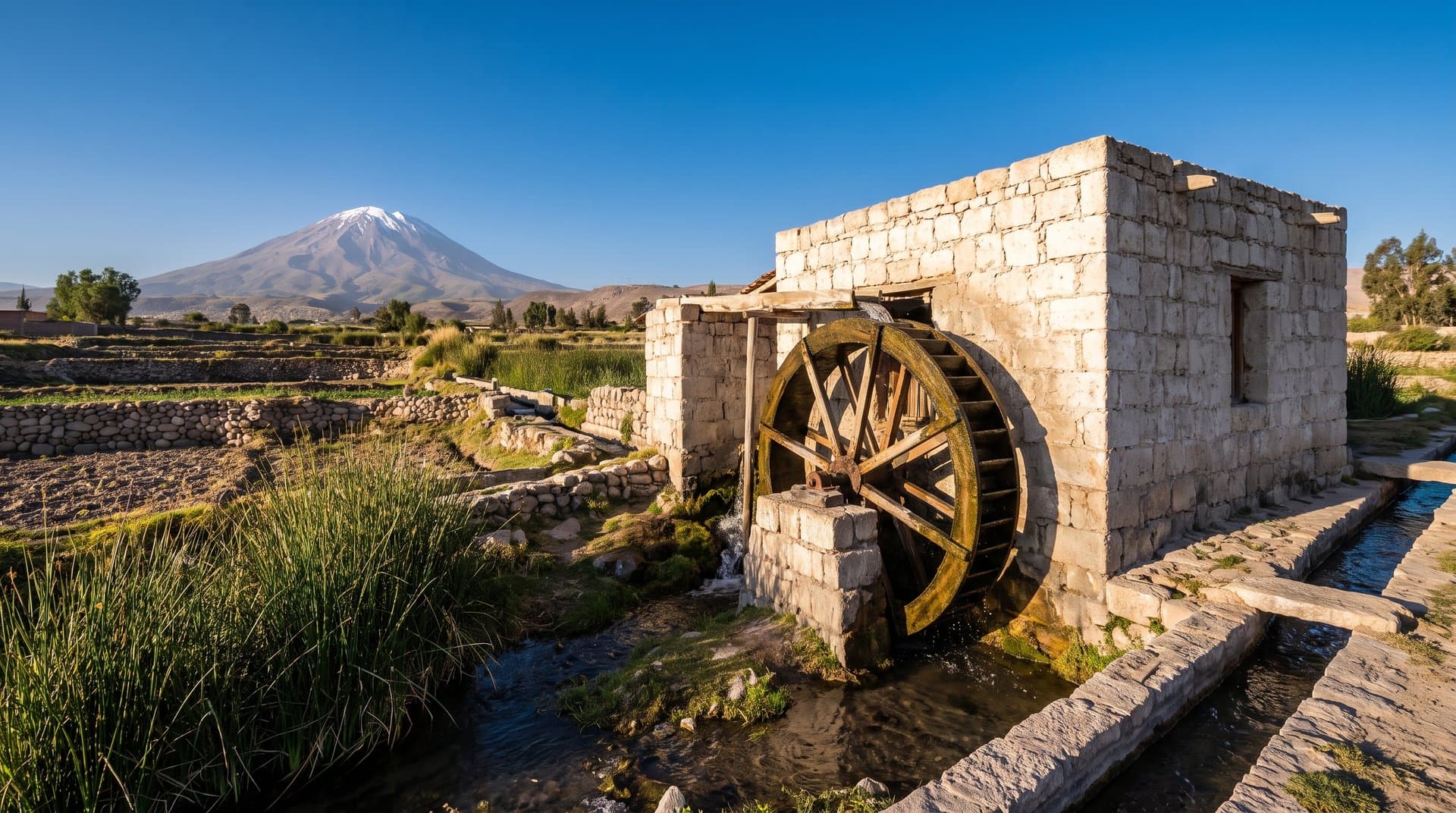
Yura is not just the pool. The district gave its name to Cementos Yura, one of the largest cement factories in southern Peru, and to Agua Yura, the bottled water brand that comes from the same springs and is sold in any shop in Arequipa. Yura's train station, now largely out of use, was part of the old railway line that connected Arequipa with Puno and Mollendo starting in the late nineteenth century, and the stone building can still be seen next to the tracks.
Without your own car, combis leave from downtown Arequipa toward Yura and take between 40 and 50 minutes depending on traffic leaving the city; a ride-hailing taxi costs more but skips the detours. Bring a towel, sandals, and cash, because the atmosphere is small town, not credit card resort. The surrounding landscape of eucalyptus trees and volcanic rock, with the Chachani appearing when the sky is clear, is part of why people keep coming back.
Yura does not compete with the Colca Canyon or the historic center for a traveler's attention, and it is probably better off that way. It is the kind of place that survives precisely because nobody turned it into a postcard: it still belongs to the neighbor from Yanahuara who goes every other week, to the grandfather who swears the water fixed his back, to the family that would rather spend a few soles on a full afternoon at the pool than a lot more on an organized tour. For the visitor who wants to see an Arequipa that was not built for them, Yura is one of the few doors still left open.
喜欢这个故事吗?
分享给喜爱阿雷基帕的人。
你有自己关于阿雷基帕的故事吗?
投稿文章 →