Juanita, the Ice Maiden: the Inca Mummy That Changed Arequipa's History
In September 1995, ash from the Sabancaya volcano exposed the frozen body of an Inca girl sacrificed over 500 years ago at the summit of Ampato. Today she rests a few blocks from the Plaza de Armas, in a museum most visitors never plan enough time for.
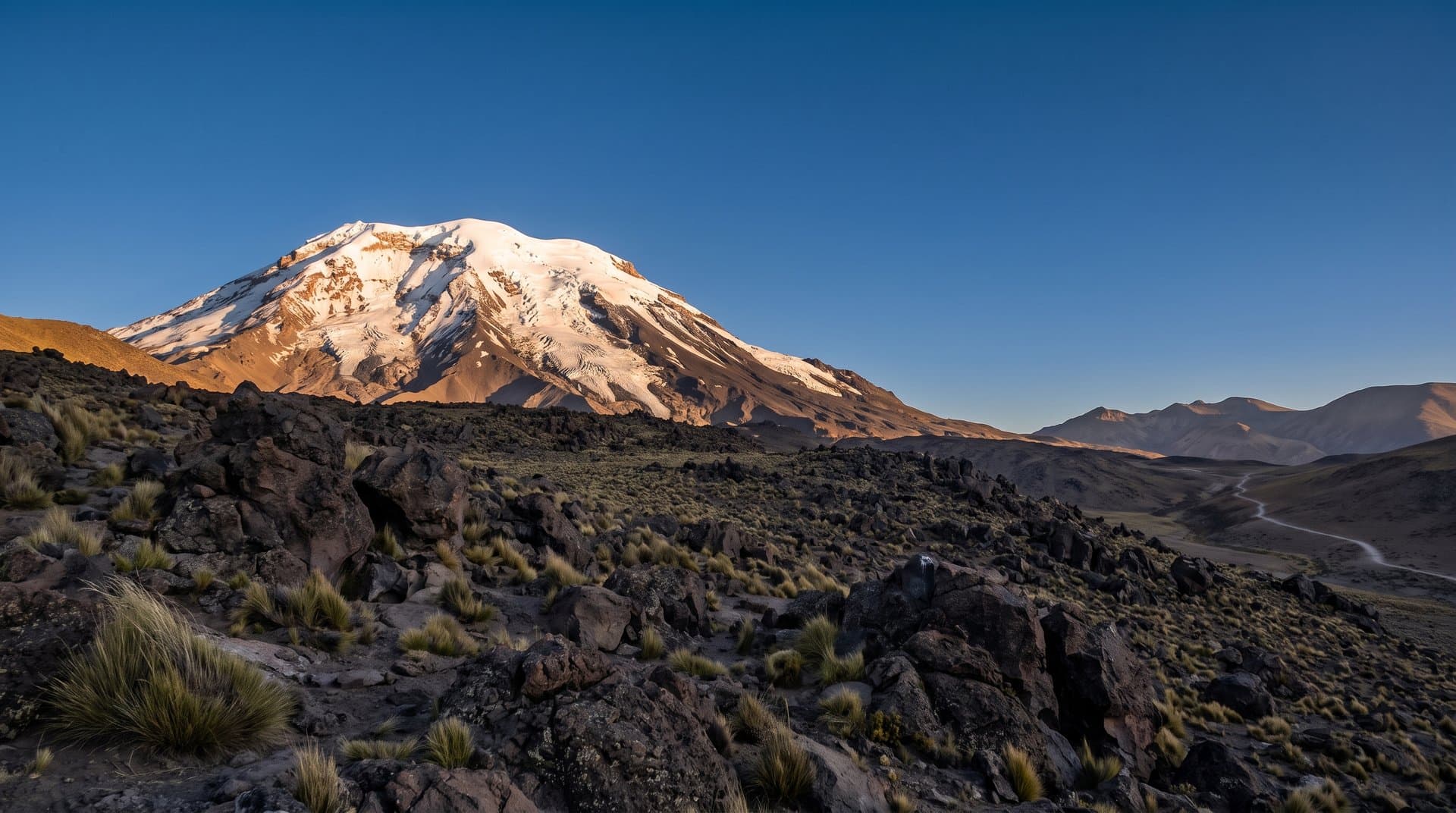
At 6,288 meters above sea level, on the summit of the Ampato volcano, an American archaeologist and an Arequipeno mountaineer found something in September 1995 that no history book on Peru had written yet. It was not a ruin or a pot. It was a frozen human body, with skin, hair, and even clothing intact after five centuries.
The discovery atop Ampato
Johan Reinhard and Miguel Zarate had climbed Ampato while tracking the neighboring Sabancaya volcano, which had been active for months and had coated much of the summit glacier in dark ash. That ash absorbed heat from the Andean sun and melted the ice faster than usual, exposing an Inca ceremonial platform no one had been able to reach in centuries. Among the stones, Zarate noticed colored feathers that did not belong there. Beneath them, wrapped in textiles, lay the funerary bundle.
The body had fallen a few meters down a slope after breaking loose from the permafrost, which, paradoxically, protected it: it refroze almost immediately, avoiding the slow sun exposure that destroys soft tissue in other Andean mummies. By the time the team carried her down the mountain wrapped in blankets and brought her to Arequipa, her internal organs, blood, and even her stomach contents were still preserved. Archaeology rarely recovers a human body in that condition.
Who she was, and why she was sacrificed
Later studies, including CT scans and hair isotope analysis, determined that Juanita was between 12 and 14 years old at the time of her death, sometime between 1450 and 1480, during the Inca empire's southward expansion. Her diet showed a sharp shift in the year before she died: from common potatoes and vegetables to the maize and meat reserved for Cusco's elite, a sign she had been chosen for a capacocha rite, the offering of healthy, well-born children to the apus, the sacred mountains, during crises such as earthquakes, eruptions, or droughts.
It was neither a crime nor a punishment: in the Inca world, being chosen for the capacocha was the highest honor a family could receive, a direct journey to live alongside the mountain gods.
Ampato was not an isolated case. In later expeditions across the same mountain range, Reinhard's team found two more child mummies on the nearby Pichu Pichu and Sara Sara volcanoes, confirming that Juanita's sacrifice was part of a network of high-altitude shrines the Incas maintained across the southern Andes, not an isolated event.
Where to see her today, in the heart of Arequipa
Juanita is not behind just any glass case. The Museo Santuarios Andinos, run by the Universidad Catolica de Santa Maria, keeps her in a specially cooled chamber on Calle La Merced, less than three blocks from the Plaza de Armas, and only displays her directly part of the year to protect the tissue; the rest of the time an exact replica is shown alongside the textiles, ceramics, and gold and silver objects buried with her. The visit includes a short documentary about the expedition and guides who explain the capacocha context, in Spanish and English, with a respect few mummy exhibits manage to convey.
Most visitors who come to Arequipa schedule Santa Catalina and the Cathedral, but leave this museum for last or skip it for lack of time. The opposite works better: go early, right at opening, before the large tour groups arrive, so you can hear the guide without being rushed. The room dedicated to Juanita is usually the final stop of the tour, built as a closing moment rather than a passing attraction.
喜欢这个故事吗?
分享给喜爱阿雷基帕的人。
你有自己关于阿雷基帕的故事吗?
投稿文章 →