Arequipa's Climate and Altitude: The Guide Before You Move
At 2,335 meters above sea level, Arequipa burns in the sun and freezes in the shade on the same day. What an expat needs to know about altitude, clear skies and cold nights before packing a single bag.
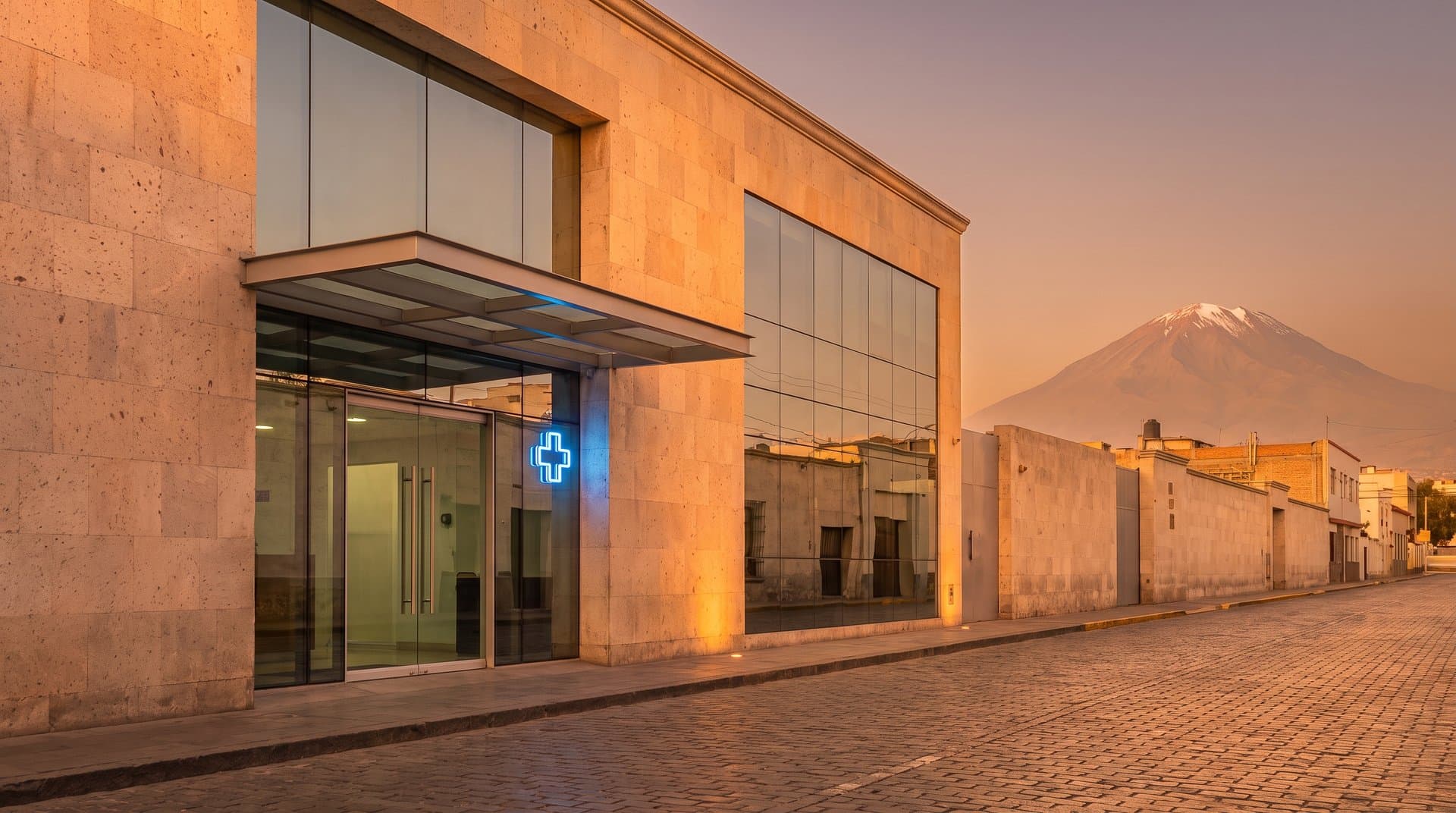
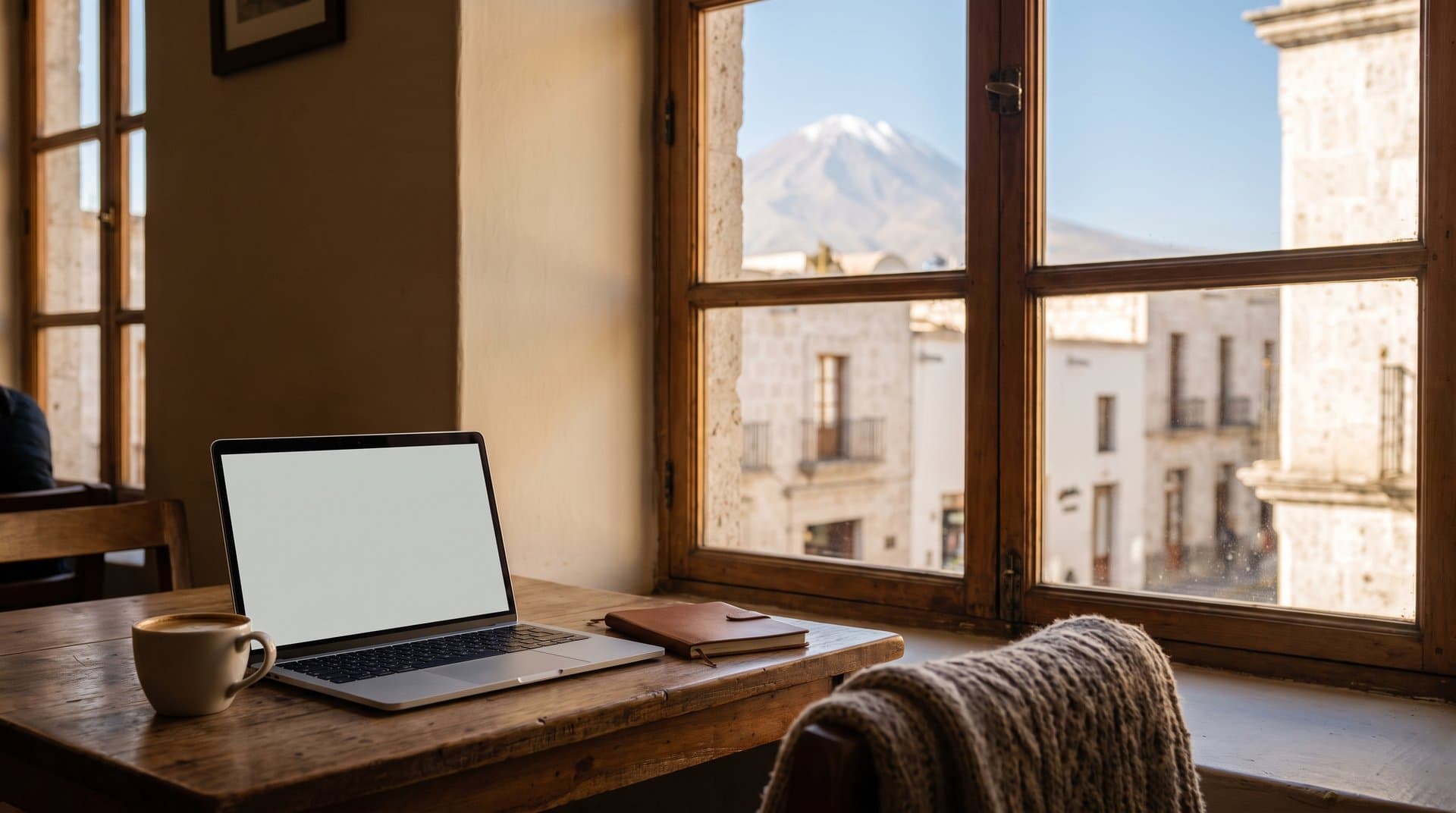
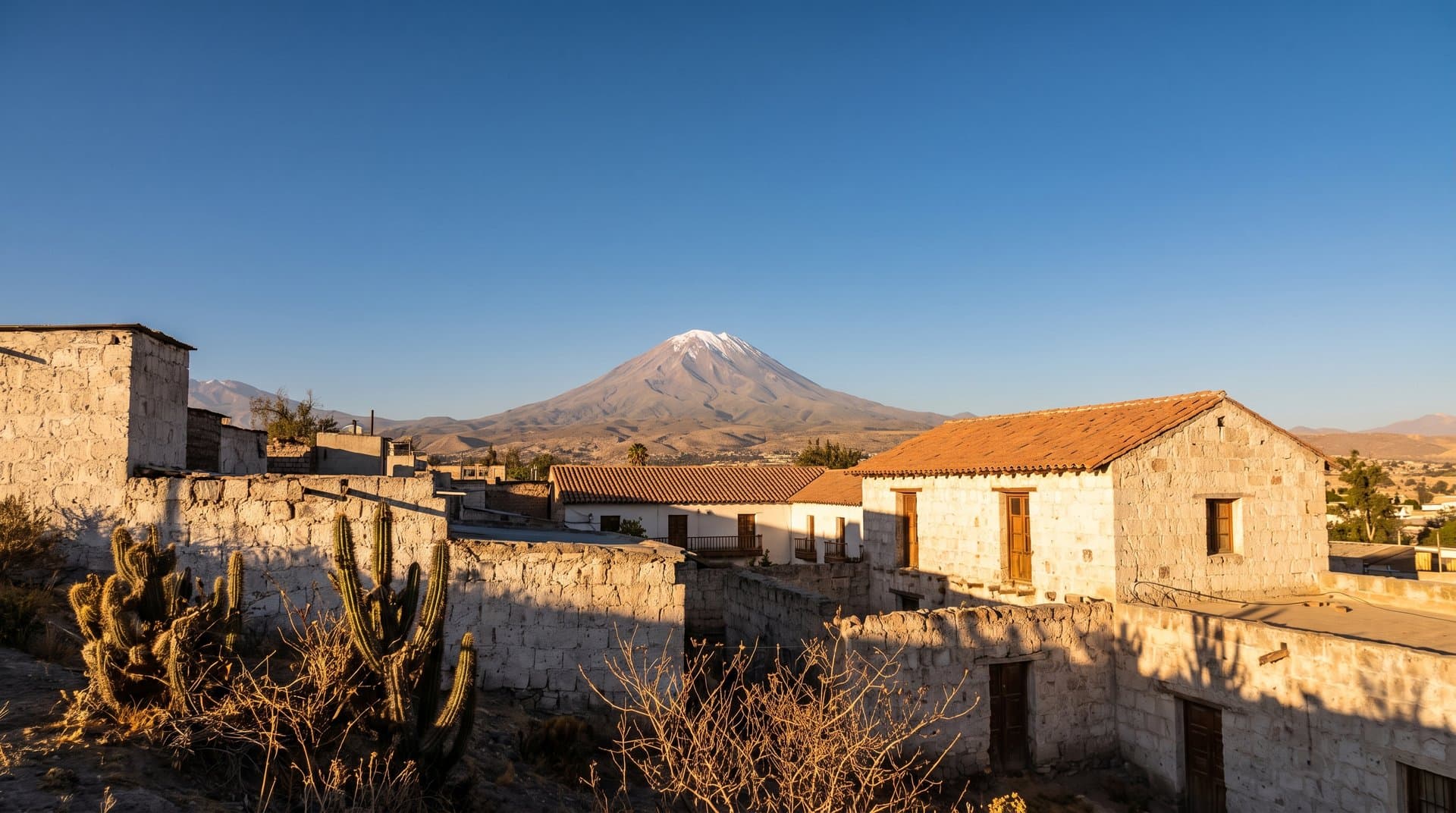
Arequipa is called the White City for the sillar stone of its facades, but it could just as easily be called the city of fixed sun: it logs more than 300 clear days a year. At 2,335 meters above sea level, at the foot of the Misti volcano, Arequipa's climate is desert and high altitude at once, which produces something that catches almost every newcomer off guard: you can get sunburned at noon and need a jacket by seven in the evening, on the same day.
The numbers that matter before you pack
2,335 meters sounds high, but compared to Cusco (3,400 m) or Puno (3,800 m) it is a moderate altitude. Most people do not feel real altitude sickness arriving in Arequipa; at worst, a mild headache or tiredness for the first two days, which usually clears up with early nights and extra water. What does hit most newcomers is the dry air: relative humidity usually sits around 20 to 40 percent, far below a coastal city like Lima, so skin and nasal passages dry out fast unless you compensate with water and moisturizer.
Two seasons, one clear sky
Arequipa does not have four distinct seasons: it has a short wet period, January through March, with afternoon showers that rarely last more than an hour, and a long dry period, April through December, without a drop of rain for weeks on end. What does swing hard is the gap between day and night temperatures. On afternoons from May to August the sky is clear and the sun warms things up to 22 or 23 degrees Celsius, but the moment it drops behind the Misti the temperature falls fast: June and July nights drop to 2 or 3 degrees, sometimes close to freezing on the outskirts of the city.
In Arequipa the cold is felt in the shade and the heat is felt in the sun, locals say, and it is the phrase that best explains how to dress here: never by what the thermometer reads, always by whether you are indoors or standing in full sunlight.
This has practical consequences no tourist brochure mentions. Most houses and apartments in Arequipa have no central heating, because during the day it is almost never needed. Sillar stone walls are thick and hold the cool air in, which is an advantage in the afternoon but a drawback at nine at night in July, when the inside of a house without a heater can feel colder than the street. Almost every expat who stays ends up buying an electric room heater and a good alpaca wool blanket for the dry winter nights.
Microclimates by district
Not all of Arequipa shares the same climate. Yanahuara and Cayma, on the higher slopes toward the Chili river, feel a couple of degrees cooler at night than the Cercado. Characato, Sabandia and Socabaya, in the agricultural valley to the southeast, sit at a lower elevation and have a reputation for milder nights, which is why several foreign retirees prefer that area for year round living over downtown. Yura, closer to the volcanoes, is the coldest of the populated areas. Before signing a long term lease, it is worth spending at least one winter night in the exact district you are considering.
To pack well: SPF 50 or higher sunscreen (the UV index in Arequipa stays high year round due to altitude and proximity to the equator), sunglasses, a hat or cap, several light layers for daytime, and at least one thick jacket or wool sweater for May through August nights. A reusable water bottle is more useful here than in almost any other Peruvian city, because dehydration from dry air is a more common complaint than any other climate related issue.
After the first month of adjustment, most foreigners who stay in Arequipa end up naming the climate as one of the reasons. There are no hurricanes, no snowy winters, the rainy season is short and predictable, and the clear sky on most days means a hike, a rooftop dinner or an outdoor barbecue can almost always be planned a week in advance with confidence.
Vous avez aimé cette histoire ?
Partagez-la avec quelqu'un qui aime Arequipa.
Vous avez votre propre histoire sur Arequipa ?
Soumettre un article →