The Pilgrimage to the Virgen de Chapi: A Whole Night Walking in Faith
Every May 1st, hundreds of thousands of Arequipeños leave their beds at midnight and walk 45 kilometers through the desert to reach the shrine of the Virgen de Chapi. It is not just a religious procession: it is the most massive and most intimate event in the White City.
Every year, on the night of April 30th, something extraordinary happens in Arequipa. Entire families, couples, groups of young people and solitary elderly walk out of their homes at midnight and start walking. Their destination is the shrine of the Virgen de Chapi, a small temple set in a desert canyon 45 kilometers southeast of the city, and the only way to truly arrive is on foot, joining a human procession that can exceed a quarter of a million pilgrims.
The Legend of the Virgin Found in the Desert
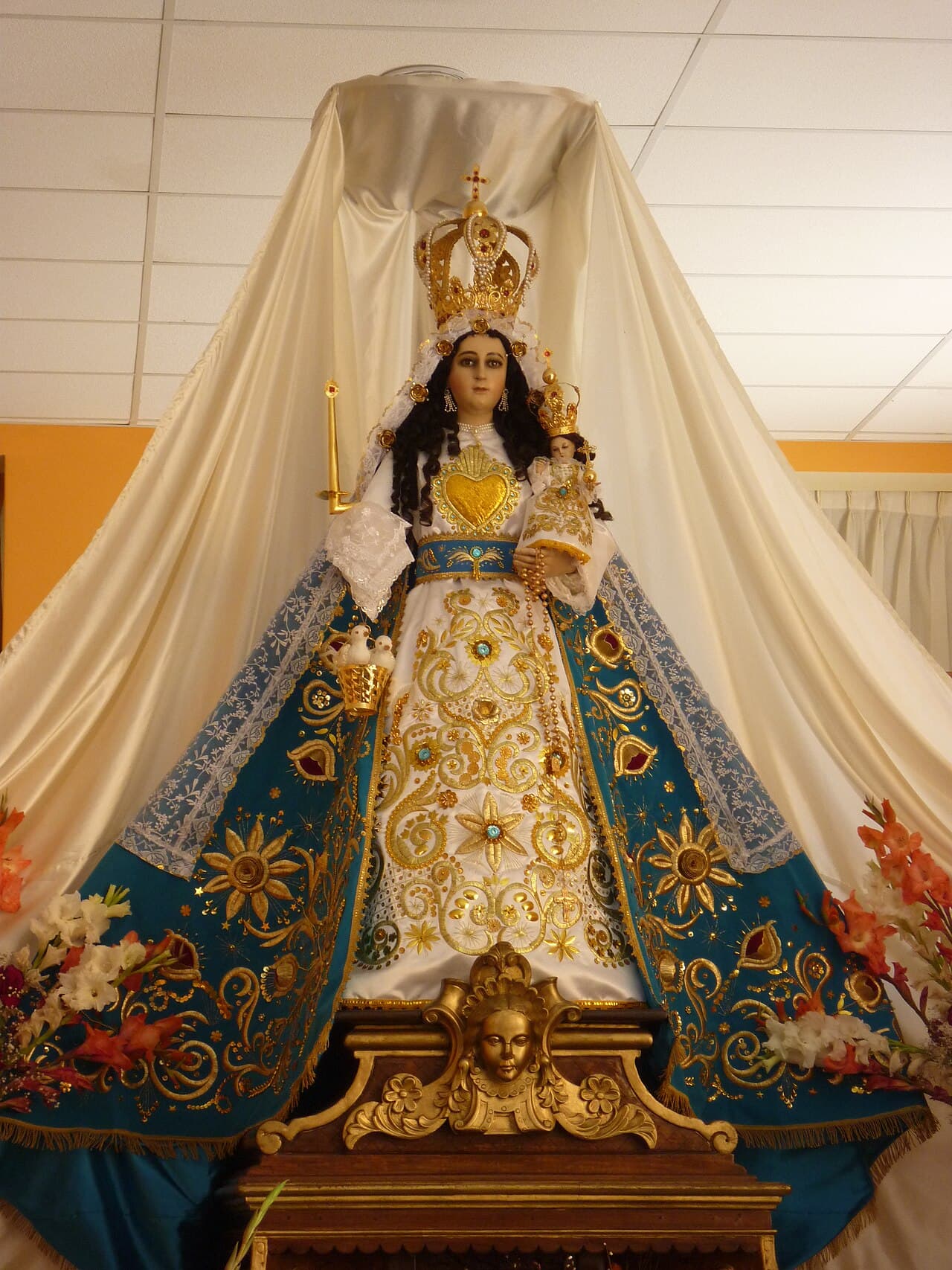
The official history of the shrine dates to the 17th century, when a group of indigenous shepherds from the Polobaya area found a small image of the Virgin Mary beside a spring in the Chapi canyon. According to oral tradition, the image had been carved from local wood and appeared inexplicably in that arid place. The ecclesiastical authorities in Arequipa, upon hearing of the discovery, ordered the image moved to the city, but legend holds that the Virgin returned on her own to the canyon every time they tried to relocate her.
Over the years, the cult of the Virgen de Chapi grew to become the most widespread in the region. A first chapel was built in the 18th century, and the current temple, with its whitewashed walls and corrugated metal roof, is the result of decades of donations and community labor. The original image, a carving of barely 35 centimeters, is guarded so carefully that it can only be seen up close during the main festivals: May 1st, Labor Day, and December 8th, the Immaculate Conception.
Walking to Chapi is not about fulfilling a promise: it is about understanding why you made it.
The Walk: A Full Night in the Desert
The official pilgrimage route starts from Ovalo Quiñones, in the La Pampilla district on the northern edge of the city, though many pilgrims begin from their own homes or from the historic center. The most devout leave after midnight to arrive at the shrine in time for the first dawn mass, around 5:30 in the morning. The road to Chapi crosses a desert plain where nighttime temperatures can drop below four degrees Celsius; it is recommended to bring warm clothing, comfortable boots, and enough water, though dozens of street stalls along the route sell hot quinoa porridge for S/ 3, herbal tea for S/ 2, and cheese bread for S/ 2.50.
Walking among that silent multitude is an experience that defies description. Pilgrims move in groups, many carrying lit candles whose flame they shield with a cupped hand against the desert wind. Some go barefoot out of devotion, treading the cold asphalt with a serenity that unsettles even the most skeptical observer. The horizon brightens gradually, and when the sun begins to tinge the summits of Pichu Pichu to the east with orange, the Chapi canyon suddenly opens up in the road like a green fissure in the gray landscape.
The Shrine at Dawn and the Return to the City
The shrine of Nuestra Señora de Chapi is administered by Dominican priests and opens its doors from 4:30 in the morning on May 1st. Masses are held every hour until noon, and the esplanade in front of the temple fills with families who have spread blankets on the stone floor to eat breakfast together after the walk. Local vendors from Polobaya set up their stalls from the evening before: a full breakfast with chicharrón, sweet potato, and corn costs S/ 8 to S/ 10, and for the return to the city there are informal buses that leave the esplanade for Arequipa's Terminal Terrestre for S/ 12.
この記事はいかがでしたか?
アレキパが好きな人にシェアしてください。
アレキパに関する自分だけの物語がありますか?
記事を投稿する →