The Drinks of Arequipa: From Anís Nájar to Té Piteado
Arequipa cuisine is famous for its rocotos and its chupes, but its drinks list tells the same story from another angle: the anisado distilled since 1900, the tea with a shot of anise for the cold, the chicha de guiñapo of the picanterías, and the emoliente of the night carts. To drink in Arequipa is also to understand it.
People talk a great deal about Arequipa's food, the rocoto relleno, the chupe de camarones, the Sunday adobo, and very little about what is drunk around that table. It is a shame, because Arequipa's drinks tell the story of the city as well as its dishes do: they speak of a cold, dry climate more than 2,300 metres up, of a distilling tradition already over a century old, and of a valley that has fermented maize since before the colonial era. From the small glass of anise taken after lunch to the steaming glass of emoliente on the corner, each drink has its hour and its ritual.
Anís Nájar and Té Piteado
Arequipa's emblematic drink is anisado, and its proper name is Anís Nájar, distilled in the city since 1900 according to its label. It is an anise liqueur, sweet and strong, that Arequipeños take in a small glass after meals as a digestif, especially after a heavy picantería lunch. But its most beloved and most local form is té piteado: a cup of hot tea with a shot of anisado added, "to pitear" is precisely that, to lace the tea with liquor. In a city where the temperature drops to 8 or 9 degrees the moment the sun hides, té piteado is the household remedy for the cold, for the throat, and for the spirits. It is ordered in cafés in the centre and in many picanterías, and a cup costs between S/ 6 and S/ 10 depending on how much anise they pour. It is the drink that warms without getting you drunk, the one that keeps company on cold nights and early mornings.
Anisado does not travel alone. In the same family of distilled drinks are the pisco of the nearby valleys, Arequipa is a producing region and proud of its bottles, and homemade fruit liqueurs that some families still prepare. But anise holds a place apart in the local identity: it appears in the toasts, at the close of a family lunch, and in the flask many homes keep "for the cold." To order a té piteado in Arequipa is, in a way, to speak the city's language.
In Arequipa the cold is not fought with a coat, it is fought with a cup of tea and a splash of anise.
Chicha de Guiñapo: The Picantería's Drink
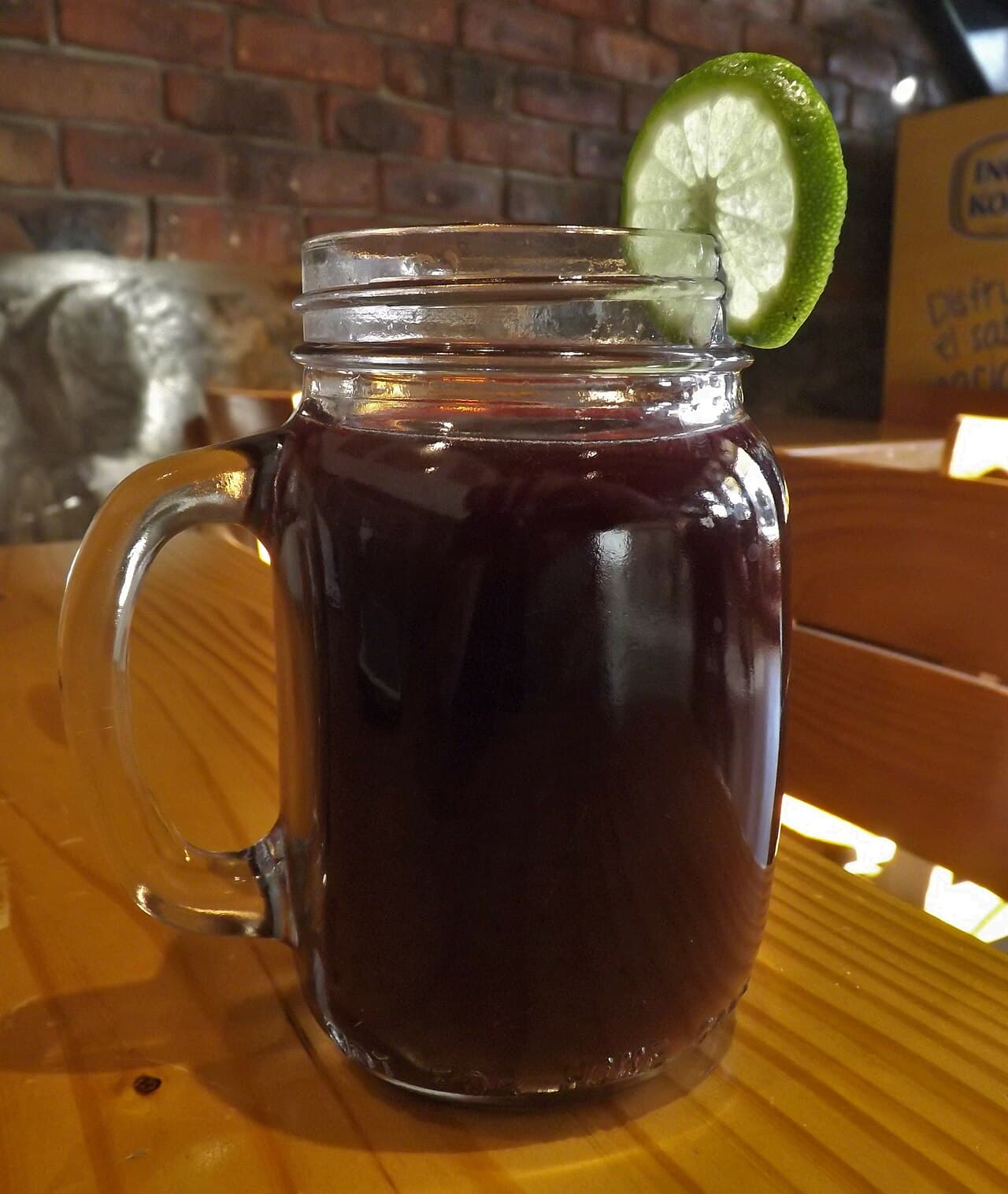
If anise is the after-lunch drink, chicha de guiñapo is the drink of the picantería. It is an artisanal beer of germinated black maize, the guiñapo, that is cooked, fermented in clay jars, and served fresh in large glasses or in the traditional cogollos. It is not sweet like the chicha morada of the corner shops: it is slightly sour, earthy, with an edge of fermentation that surprises on the first sip and hooks you by the third. In the traditional picanterías of Yanahuara, Sachaca, and Cayma, chicha is served in jugs and costs very little, a glass can run between S/ 3 and S/ 5, and it naturally accompanies the spicy dishes. Andean custom dictates spilling the first splash on the ground for Pachamama before drinking; many Arequipeños do it without thinking, the way one crosses oneself. Chicha de guiñapo is, more than a drink, the liquid in which the picantería keeps its memory.
Emoliente and the Drinks of the Street
When night falls and the anticucho carts come out, the most democratic drink of all appears: emoliente. It is a hot infusion of toasted barley, flaxseed, horsetail, and other herbs, poured from metal thermoses by the emolienteros who set up on the corners of the centre. It costs S/ 2 or S/ 3, is drunk standing while you wait for your anticucho, and warms the hands as much as the throat; some ask for an extra shot of flaxseed or alfalfa depending on what they want to cure that night. Alongside the emoliente, the street offers chicha morada, sweet, of purple maize, pineapple, and cinnamon, non-alcoholic, the soft drink of lunches, and the fruit juices of markets like San Camilo, where for S/ 6 or S/ 7 they serve enormous glasses of papaya, banana, and maca. Between the small anise glass after lunch, the chicha of the picantería, and the emoliente of the night, Arequipa is drunk across the whole day, and each sip says something different about the city.
この記事はいかがでしたか?
アレキパが好きな人にシェアしてください。
アレキパに関する自分だけの物語がありますか?
記事を投稿する →